Quick Answer
Voice-to-text dental charting software lets clinicians document findings by speaking, so the chart updates as they call out readings without anyone typing or scribing. It is especially valuable for periodontal charting, where a hygienist can call probing depths and have them recorded in real time while keeping both hands on the patient. Voice charting speeds documentation, improves accuracy by capturing findings the moment they are observed, and reduces the need for a second person to scribe.
Charting is one of the few parts of a clinical visit that still pulls attention away from the patient. Periodontal charting in particular traditionally requires either a scribe or a stop-and-type rhythm that slows the whole appointment.
Voice-to-text dental charting software changes that. The clinician speaks, the chart fills in. Here is how it works and why it matters, especially for hygiene.
What is voice-to-text dental charting?
It is charting by voice. The clinician speaks findings aloud and the software records them directly into the chart in real time, with no typing and no separate person scribing.
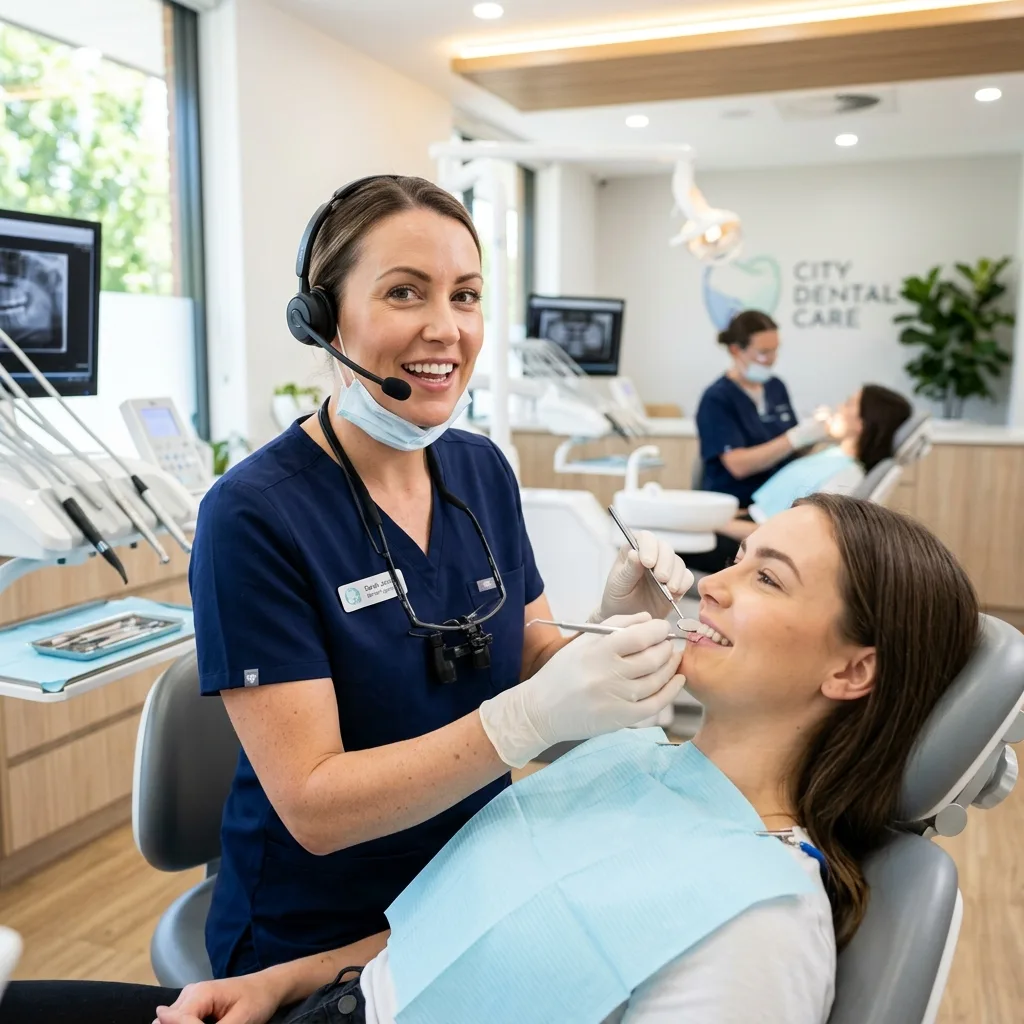
For periodontal charting, this means a hygienist calls out probing depths and the numbers populate the perio chart as they are spoken. The documentation happens in the moment, hands-free.
Why does hands-free charting matter for hygiene?
Periodontal charting is a hands-on, continuous task. The traditional options are to stop and type between readings, which fragments the exam, or to have an assistant scribe, which ties up a second person.
Voice charting removes both compromises. The hygienist keeps both hands on the patient and the instrument, calls the readings, and the chart records them. The exam flows uninterrupted and no second person is needed.
How does voice charting improve accuracy?
Accuracy improves because findings are captured the moment they are observed, not reconstructed from memory at the end of the appointment or transcribed later from handwritten notes.
A probing depth called and recorded in real time is the depth that was actually measured. There is no gap between observation and documentation where errors creep in. For periodontal data, which is clinically and legally significant, that real-time accuracy matters.
What are the benefits for the practice?
The gains are concrete across the hygiene department.
- Faster periodontal charting, freeing time in the hygiene schedule
- No second person needed to scribe, freeing assistant time
- More accurate periodontal records captured in real time
- Better clinical defensibility from contemporaneous documentation
- A smoother, more focused patient experience during the exam
How does voice charting fit with the practice system?
Voice charting writes into the chart in the practice management software, so the periodontal data lives where the rest of the patient record does, immediately available to the provider and for treatment planning.
It is part of a broader move toward letting clinicians focus on patients while documentation handles itself, the same principle behind AI clinical documentation and the AI Dental Receptionist handling the front desk. Each removes a task that used to pull attention away from care.
Frequently Asked Questions
See the AI Dental Receptionist in action
Book a 20-minute demo and watch it answer calls, book appointments, and run reactivation campaigns inside your practice management software.
Book Your Free Demopatientxpress.us | 949-542-6773