Quick Answer
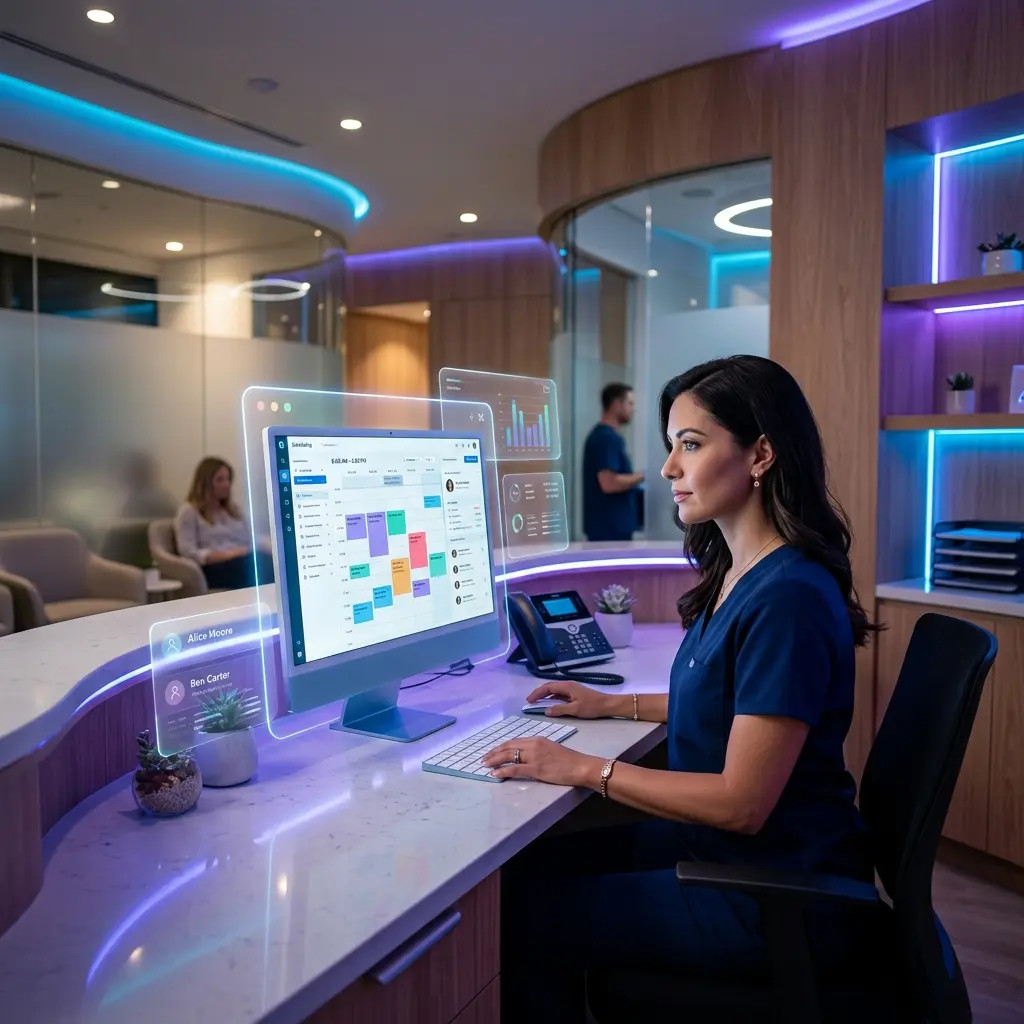
Dental scheduling software is the system a dental practice uses to book, reschedule, and manage patient appointments. The newest generation pairs traditional scheduling tools with voice AI that answers inbound calls, books appointments directly into the schedule, fills cancellations from an ASAP list, and runs recall outreach automatically. The result is a schedule that fills itself without front desk phone time.
Dental scheduling software used to mean one thing. A calendar view inside the practice management software where the front desk dragged appointments into slots. That core function still matters. But what wraps around it has changed completely.
In 2026, dental scheduling software is no longer just a calendar. It is a system that books, fills, confirms, and follows up on appointments largely without front desk involvement. The reason is voice AI. Specifically, the AI Dental Receptionist that has become the front edge of any modern dental scheduling stack.

What does dental scheduling software include in 2026?
A complete modern dental scheduling stack has four layers. The calendar (which still lives inside the practice management software), the inbound channel (how patients reach out to book), the outbound channel (how the practice reaches back to fill the schedule), and the confirmation and reminder layer.
What is new is that voice AI now sits across all four layers. The AI answers inbound calls and books directly into the calendar. The AI runs outbound calls and texts to fill cancellations and recall lapsed patients. The AI handles confirmations and reschedules before the appointment date. The calendar is still the calendar. Everything around it has been automated.
Why does scheduling break in most practices?
It breaks because the schedule depends on the front desk having time to work it. And the front desk rarely has that time.
On a typical day, the front desk fields 50 to 100 inbound calls, greets patients arriving for appointments, manages check-in and checkout, handles insurance questions, and processes payments. Working the schedule (filling cancellations, calling lapsed patients, confirming next-week appointments) is the last thing on the list. Most days it does not happen at all.
That is why dental scheduling software with built-in automation is no longer optional. The schedule that fills itself is the one that gets full.
How does AI scheduling actually fill the schedule?
Three ways. First, by answering every inbound call instead of letting them roll to voicemail. The conventional answer rate at a dental practice is about 75 percent during business hours and around 10 percent after hours. AI handles 100 percent of both.
Second, by working the ASAP list when cancellations come in. A cancellation 12 hours before an appointment used to mean an empty chair. With AI, the cancelled slot triggers automatic outreach to the patients most likely to take it, and the slot fills before the original appointment time passes.
Third, by running recall and reactivation outreach. Patients who have not been in for hygiene in 8 to 12 months get a sequence of calls and texts that schedule them back in. This is the cheapest acquisition channel a practice has, and most practices never work it because the front desk does not have time.
What should I look for in dental scheduling software?
Five things matter when evaluating dental scheduling software in 2026.
- Native integration with your practice management software. Open Dental, Dentrix, Eaglesoft, and other major systems should connect deeply, not through a clunky import or manual sync.
- Voice AI for inbound calls. The system should answer every call, in English and Spanish, and book directly into the schedule.
- Automated cancellation filling. An ASAP list that works itself when openings appear.
- Recall and reactivation outreach as part of the system, not as a separate tool.
- Real-time reporting. Practice owners and office managers should be able to see, at a glance, how full the schedule is for the next 14 days and what is driving the gaps.
What does it cost to add AI to dental scheduling?
Adding voice AI to dental scheduling is typically less expensive than hiring a single full-time front desk position, and it covers unlimited concurrent calls 24 hours a day. The ROI math is usually straightforward. Most practices we work with see the payback inside the first 90 days from filled cancellations and recall conversions alone.
The bigger gain is harder to quantify upfront. It is what your front desk does with the time that gets handed back to them. That is the part practice owners notice in month three.
Frequently Asked Questions
See the AI Dental Receptionist in action
Book a 20-minute demo and watch it answer calls, book appointments, and run reactivation campaigns inside your practice management software.
Book Your Free Demopatientxpress.us | 949-542-6773