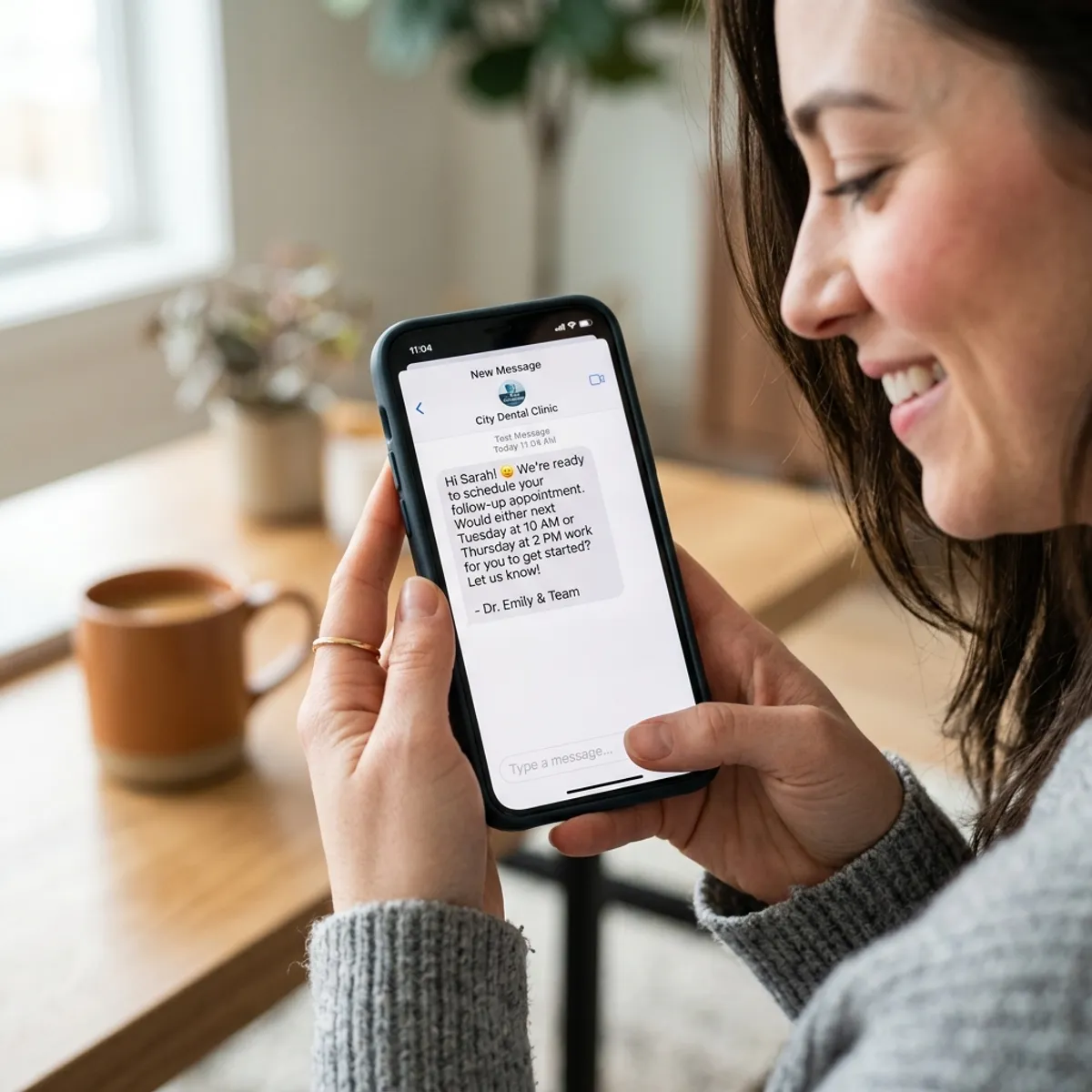
Every practice has a list of patients with diagnosed treatment that was never scheduled. That list represents real production sitting idle, often a large sum across the patient base. The treatment was recommended; the patient just never booked it.
A good follow-up text brings those patients back. Here are samples you can adapt, plus how to automate the outreach so the list actually gets worked.
Quick Answer
Effective unscheduled treatment texts are short, specific, and tied to the patient's actual treatment plan — referencing the exact procedure recommended and making it easy to book with a single link, rather than sending a generic recall reminder.
Why does diagnosed treatment go unscheduled?
Patients leave without booking for ordinary reasons: they wanted to check their schedule, talk to a spouse, or sort out finances, and then life moved on. The intention was there; the follow-through was not.
Without a system to follow up, that treatment simply sits unscheduled. The patient is not refusing care; they have just forgotten or deprioritized it. A timely, warm reminder is often all it takes to bring them back.
What makes an effective unscheduled treatment text?
The best texts share a few qualities.
- Short and easy to read on a phone
- Personalized with the patient's name and practice name
- Specific enough to feel relevant without sharing clinical detail in writing
- Warm and helpful in tone, never pushy or guilt-based
- Includes an easy next step: reply to book or a number to call
What are some text samples I can use?
Here are adaptable examples for different situations. Keep clinical specifics general in writing for privacy, and let the booking conversation handle the details.
- General follow-up: "Hi [Name], this is [Practice]. Dr. [Name] recommended some treatment at your last visit that we have not gotten on the schedule yet. We would love to help you take care of it. Reply here or call [number] to find a time that works."
- Gentle nudge: "Hi [Name], we noticed there is treatment Dr. [Name] recommended that is still open on your chart. Getting it done sooner usually keeps things simpler. Want us to find you a time? Just reply here."
- Benefits-aware: "Hi [Name], this is [Practice]. You have recommended treatment that has not been scheduled, and your insurance benefits renew at year end. We would be glad to help you plan it out. Reply or call [number]."
- Re-engagement: "Hi [Name], it has been a while, and you still have treatment Dr. [Name] recommended. We would love to get you back in and finish what we started. Reply here to schedule."
How should you sequence the follow-up?
One text rarely does it. A short sequence works better: an initial message, a follow-up a week or two later if there is no response, and a final check-in after that. Spacing matters so it feels helpful rather than nagging.
Mixing channels helps too. A text followed by a call from the AI Dental Receptionist reaches patients who do not respond to text. The goal is gentle persistence, not pressure.
How do you automate unscheduled treatment outreach?
Manually working the unscheduled treatment list is exactly the task that never gets done, because the front desk is busy with the day in front of them. Automation runs it continuously in the background.
The system identifies patients with unscheduled treatment from the practice management software, sends the text sequence automatically, and when a patient responds, the AI Dental Receptionist handles the scheduling conversation and books the treatment directly. The list works itself, recovering production that would otherwise stay idle.
Frequently Asked Questions
How do you write a text to a patient about unscheduled treatment?
How often should you follow up on unscheduled treatment?
Is it okay to mention insurance benefits in the text?
Can unscheduled treatment follow-up be automated?
See PatientXpress in action
Book a 20-minute demo and see how our platform answers calls, books appointments, and runs your practice automations inside the software your team already uses.
Book a Demo