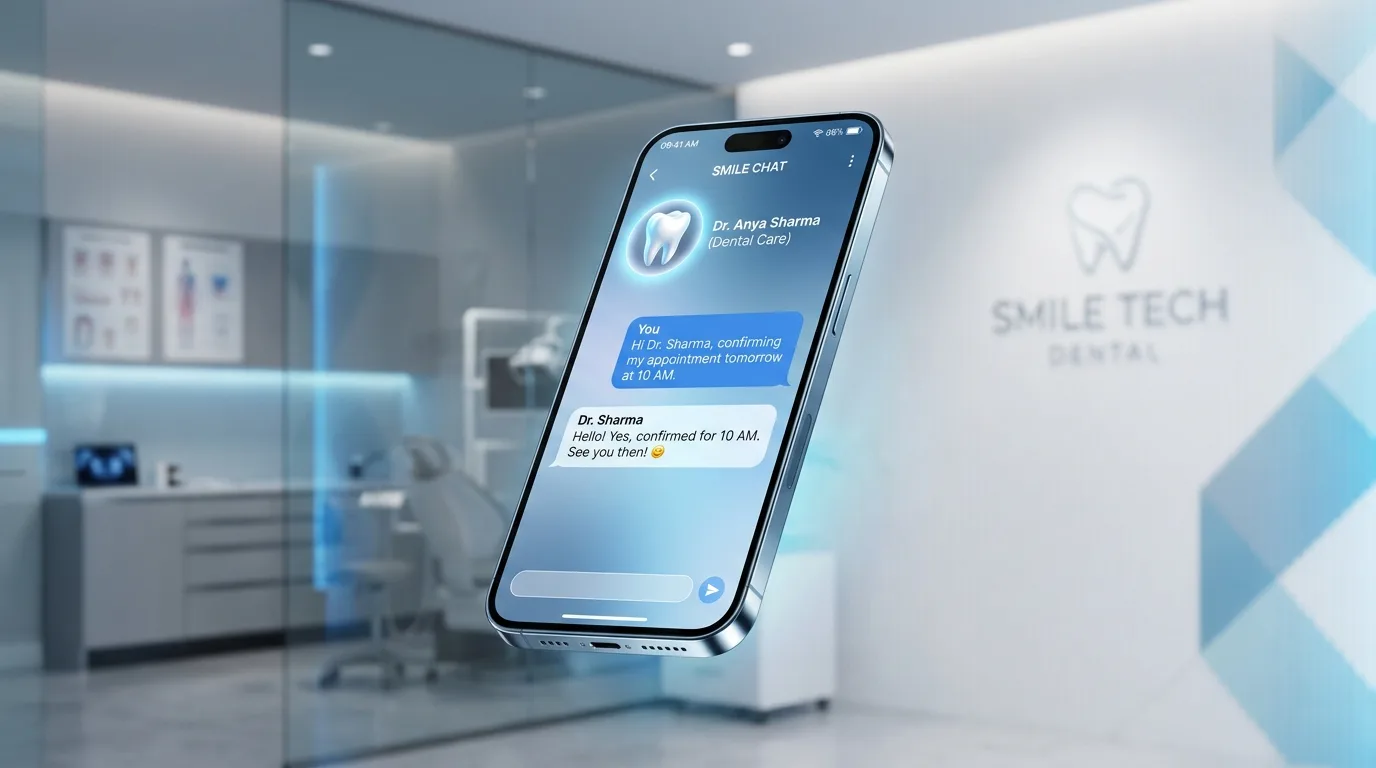
AI Generated Graphic
Quick Answer
A dental patient texting platform should offer two-way conversational messaging from a shared team inbox, automated messages tied to the live schedule, built-in consent and opt-out handling, and full message history on the patient record. Texting works best as a complement to answered phones, not a replacement for them.
Why has texting become the default channel for dental patients?
Because it fits how patients actually live. A text can be read in a meeting, answered from a school pickup line, and referred back to later, none of which is true of a phone call or a voicemail. For the practice, texting turns interruptions into a queue: messages arrive, sit visibly until handled, and never ring over a patient standing at the desk.
The result is that texting now carries a large share of routine practice communication: confirmations, running-late notices, form links, balance notifications, and quick questions. The practices that adopted it early describe the same thing, which is that the phone got quieter and the front desk got calmer.
What separates a real platform from a texting feature?
Plenty of products can send a text. The differences show up in daily use. Two-way messaging from a shared inbox, so any team member can see and continue any conversation, matters more than any automation. Message history attached to the patient record matters, because a conversation that lives in one person's phone is a liability. Automated messages should pull from the live schedule so they are never wrong. And consent, opt-outs, and quiet hours should be handled by the platform rather than by team vigilance.
One more separator: the platform should handle the messages your automations generate and the ones patients start themselves in the same place. If automated and conversational texting live in two different tools, your team is now watching two inboxes.
Where does texting fit next to the phones?
Texting is superb for the asynchronous middle of practice communication, but the front door of a dental practice is still the phone, especially for new patients and anything urgent. A texting platform reduces call volume; it does not eliminate the calls that matter most, and it cannot answer the ones that still come.
That is why the strongest setup pairs the two. The AI Dental Receptionist answers every call and books against the live schedule, while the texting layer carries confirmations, forms, and follow up. Patients choose their channel, and both channels actually respond. Neither one leaks.
How does PatientXpress handle patient texting?
Texting in PatientXpress runs against the same live data as everything else, natively on Open Dental and through Kolla for practices on Dentrix, Eaglesoft, and other systems. Automated reminders, confirmations, and outreach share one environment with two-way conversations, message history sits with the patient record, and consent handling is built in.
Because the schedule, the phones, and the texting all read the same source, a patient can get a reminder by text, call to reschedule, and receive the updated confirmation, with every step reflecting reality. That is the standard worth holding any platform to.
What does good texting etiquette look like from a practice?
Patients grant practices access to their most personal channel, and the practices that keep that access follow consistent manners. Business hours for outbound conversation, with automated messages inside polite windows. A practice identity on every thread, so no message arrives anonymous. Human tone without corporate stiffness, since texting is a conversational medium and reads strangest when it sounds like a letter. And restraint in frequency, because the channel's power comes from every message mattering.
Internally, etiquette means response standards: a target for how fast patient-initiated texts get answered during open hours, visible to the team, with the inbox owned rather than ambient. A practice that answers texts in minutes has effectively opened a second front door. One that answers in days has installed a complaint generator.
What can texting carry beyond reminders?
Once the channel is established, its range is wide: running-late notices in both directions, form links that get completed on phones in the parking lot, insurance card photo requests that save a check-in step, post-op check-ins the day after surgery that patients consistently describe as the practice caring, payment links that settle balances in a minute, and review invitations timed to the happy moment after a good visit.
Each use case follows the same rule: logistics and light coordination in the open channel, clinical substance in secure ones. Held to that rule, texting becomes the connective tissue of the patient relationship, the channel where dozens of small frictions quietly disappear.
Frequently Asked Questions
See the AI Dental Receptionist in action
Book a 20-minute demo and watch it answer calls, book appointments, and run reactivation campaigns inside your practice management software.
Book Your Free Demopatientxpress.us | 949-542-6773