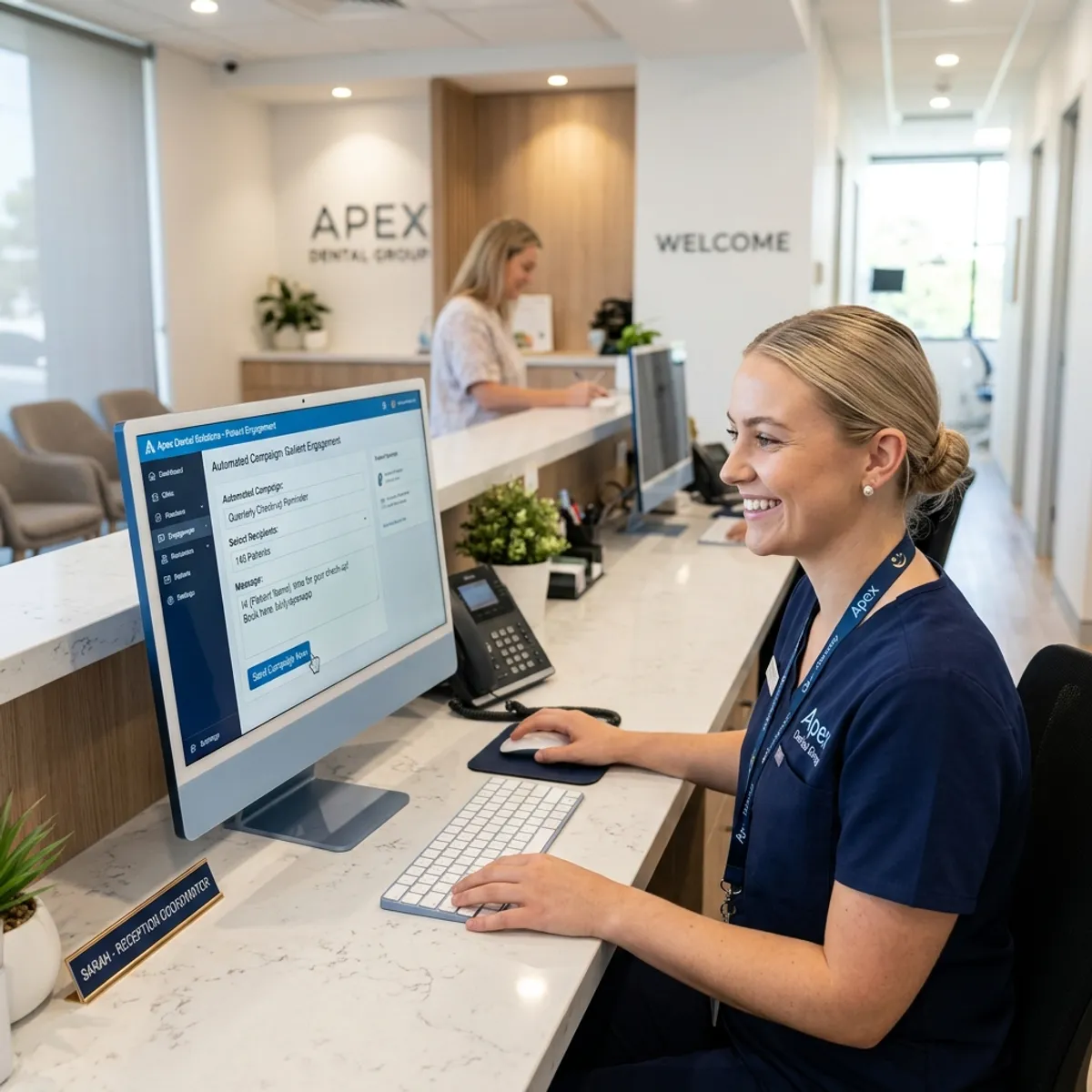
Text messages get read. Open rates for SMS dwarf email, which makes texting one of the most effective channels a dental practice has for reaching patients. But that power cuts both ways: a poorly run texting program annoys patients and gets them to opt out.
Here is what works in dental text marketing and what to avoid.
Quick Answer
Text message marketing for dental practices outperforms email by a wide margin for recall campaigns, review requests, and reactivation outreach — because texts are opened within minutes, require fewer clicks to act on, and don't compete with inbox clutter.
Why does text marketing work for dental practices?
Texts get opened and read, usually within minutes, far more reliably than email. For time-sensitive messages like an open appointment this week or a recall that is due, that immediacy is exactly what you want.
Patients also increasingly prefer to interact with their dentist by text. A recall nudge they can act on with a quick reply fits how they already communicate, which is why text consistently outperforms other channels for response.
What kinds of texts actually drive bookings?
The texts that work are useful to the patient, not just promotional to the practice.
- Recall reminders when a patient is due for hygiene
- Reactivation outreach to lapsed patients
- Open appointment alerts when a desirable slot opens up
- Benefit-expiration nudges before year-end
- Unscheduled treatment follow-up
- Appointment confirmations and easy rescheduling
What should dental practices avoid in text marketing?
The fastest way to ruin a texting program is to treat it as a broadcast channel for generic promotions. High-frequency, low-value blasts get patients to opt out and erode trust.
Avoid texting without clear consent, sending too often, and sending messages that are not relevant to the specific patient. A practice that texts a patient three times a week about unrelated offers will lose them. One that sends a timely, relevant nudge keeps them engaged.
What are the consent and compliance basics?
Text marketing requires patient consent. Patients should opt in to receive messages, and every program should honor opt-outs immediately. Keeping messages relevant to the patient relationship, appointments, recall, and care, rather than pure advertising also keeps the program on solid footing.
Beyond the rules, consent and relevance are simply good practice. Patients who agreed to hear from you and find your texts useful stay subscribed and respond. Confirm current regulatory requirements for your situation, since rules around SMS evolve.
How does AI improve dental text marketing?
AI shifts texting from broadcast to conversation. Instead of blasting the same message to everyone, AI-driven outreach personalizes to each patient's situation: who is due, who lapsed, who has unscheduled treatment, and runs the right sequence for each.
More importantly, AI handles the replies. When a patient texts back to book, the system handles the scheduling conversation rather than dropping it on the front desk. The AI Dental Receptionist connects the texting to actual booking, so a marketing text turns into a scheduled appointment automatically.
Frequently Asked Questions
Is text message marketing effective for dental practices?
Do I need patient consent to text market?
How often should a dental practice text patients?
Can text marketing connect directly to booking?
See PatientXpress in action
Book a 20-minute demo and see how our platform answers calls, books appointments, and runs your practice automations inside the software your team already uses.
Book a Demo