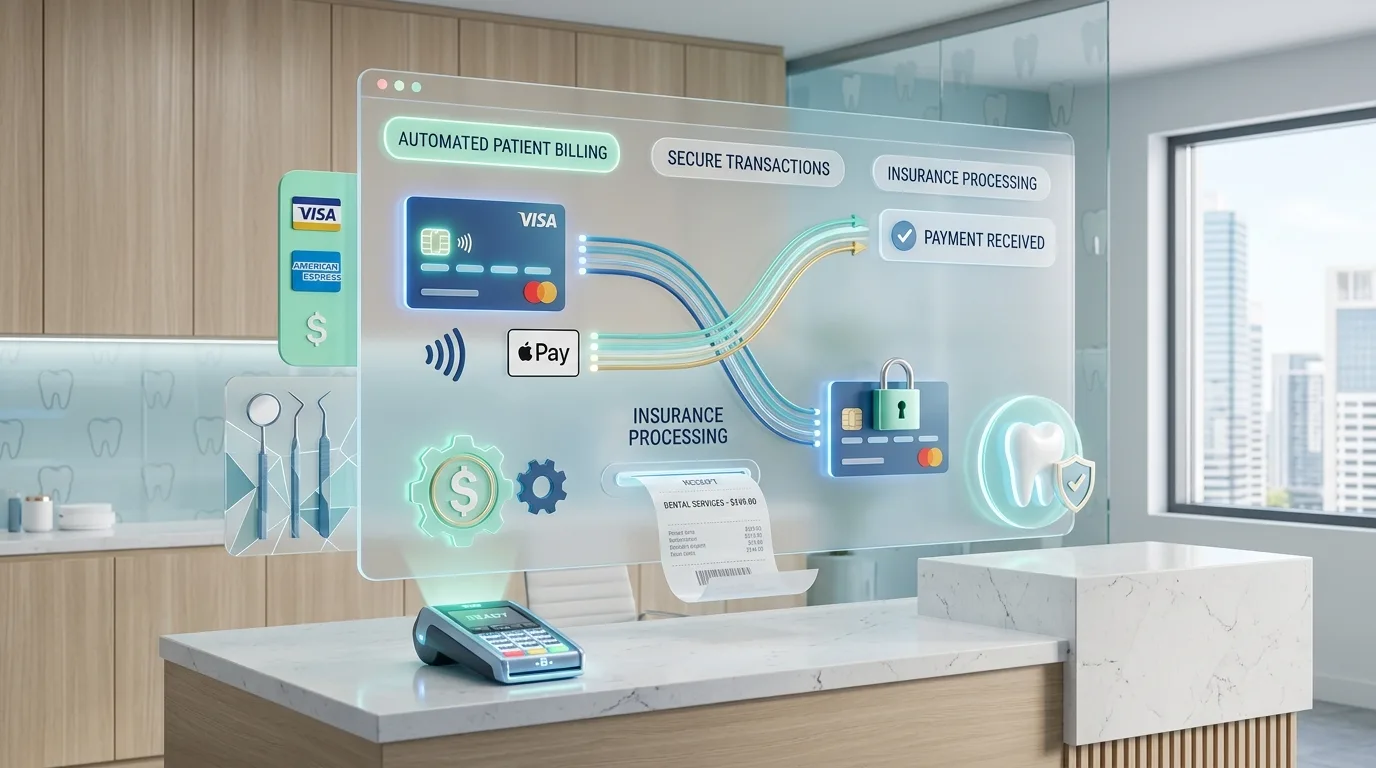
AI Generated Graphic
Quick Answer
Payment automation for dental practices means balances get collected with minimal manual effort: accurate patient portions presented at checkout, text-to-pay links for anything remaining, card-on-file options patients consent to, automatic payment posting to the ledger, and reminders that run on their own. The payoff is faster collections and a team that spends almost no time chasing balances.
Where does manual payment handling lose money?
In small, compounding ways. Balances that could have been collected at checkout become statements because the amount was not ready. Statements sit in mailboxes for weeks. Payments that do arrive have to be posted by hand, which delays the books and invites errors. And the reminder work, the calls and re-sent statements, lands on whoever has a spare moment, which in a busy practice is no one.
Every step a payment has to wait for a person is a step where it slows down. Automation removes the waiting.
What does an automated payment flow look like?
At checkout, the patient portion is already known because insurance was verified ahead of the visit, so most balances are settled on the spot. Anything remaining triggers a text-to-pay link the same day, which the patient can pay from their phone in under a minute. Patients who consent to card on file can have agreed balances charged automatically. Payments post to the ledger the moment they happen, and unpaid balances get a polite automated reminder cadence instead of depending on someone remembering.
The pattern is the same one that fixed appointment reminders: move the routine from human memory to system schedule, and reserve people for the conversations that need them.
Do patients actually prefer this?
Broadly, yes. Consumer payment research across industries consistently shows strong and growing preference for digital payment options over mailed statements and phone payments, and healthcare is following the same curve. A text link that takes a minute beats finding a checkbook, and a clear amount presented at checkout beats a surprise statement three weeks later.
The practices that worry automation will feel impersonal usually find the opposite: the awkward part of payments was never the technology, it was the chasing, and automation is what ends the chasing.
How does this fit the rest of the practice stack?
Payment automation only works when it reads real data. The checkout amount depends on verified benefits. The text-to-pay link needs the live balance. The posting needs to land in the actual ledger, not a sidecar report someone reconciles monthly. That is why payments belong inside the integrated platform rather than bolted alongside it.
PatientXpress runs payment processing, text-to-pay, and automated reminders against the same live data as the schedule and the ledger, natively on Open Dental and through Kolla for other systems. From verification to zero balance, no step waits on a person unless a person is genuinely needed.
What does the first month of payment automation look like?
Week one is setup: processing connected, text-to-pay enabled, receipt templates set, and the team briefed on the new checkout script. Week two turns on automated posting and the reminder cadence for existing balances, which produces the first satisfying wave of old receivables quietly resolving by phone tap. Weeks three and four add card-on-file enrollment at checkout for consenting patients and tune the reminder timing based on early response.
The measurable shift arrives fast because the friction removal is immediate: balances that would have waited for the statement cycle start clearing the same day as service. Most practices see their time-to-collect distribution transform within the first full cycle, with the receivables aging report thinning from the newest buckets forward.
How does automated posting change the back office?
Manual posting is the invisible tax of payments: every card receipt, mailed check, and payer remittance keyed into the ledger by hand, with transposition errors and end-of-day batch reconciliation as standing features. Automated posting writes each payment to the correct patient ledger the moment it settles, matched and receipted, which collapses the daily reconciliation to an exception review.
The downstream effect is trustworthy numbers all month long. When the ledger reflects reality in real time, the owner's production and collection reports stop being month-end archaeology, financial conversations with patients start from current balances, and the bookkeeper's close shrinks from days to hours. Clean posting is unglamorous and load-bearing.
Frequently Asked Questions
See the AI Dental Receptionist in action
Book a 20-minute demo and watch it answer calls, book appointments, and run reactivation campaigns inside your practice management software.
Book Your Free Demopatientxpress.us | 949-542-6773