Quick Answer
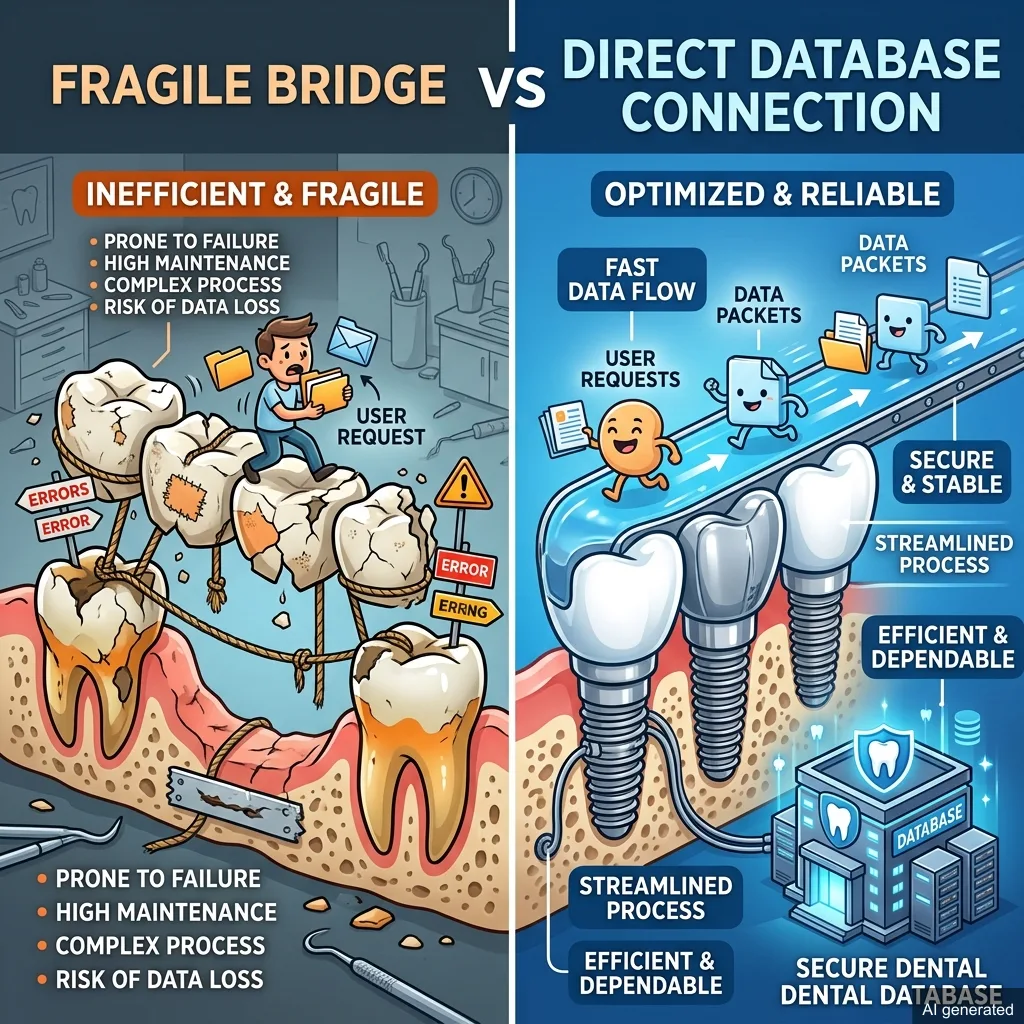
An API connector is a bridge between two separate systems that can lag or drop, while native integration works inside your database directly. The difference shows up as reliability in everyday use.
What is an API connector?
Many dental tools reach your practice management software through an external interface that sits between their product and your database. It works by passing information back and forth. That design is common, and it functions until the bridge slows down or drops, at which point your schedule and your records can fall out of step without anyone noticing right away.
How is native integration different?
Native integration removes the bridge. PatientXpress reads and writes inside Open Dental in real time, so there is one set of records rather than two that have to be reconciled. When the connection is part of the system instead of a guest, there is far less that can quietly go wrong.
Which one should a practice prefer?
For anything that touches the schedule or the chart, the closer the tool sits to the source of truth, the fewer surprises you inherit. When you compare platforms, ask plainly whether the product writes inside your system or talks to it from the outside.
Frequently Asked Questions
See the AI Dental Receptionist in action
Book a 20-minute demo and watch it answer calls, book appointments, and run reactivation campaigns inside your practice management software.
Book Your Free Demopatientxpress.us | 949-542-6773