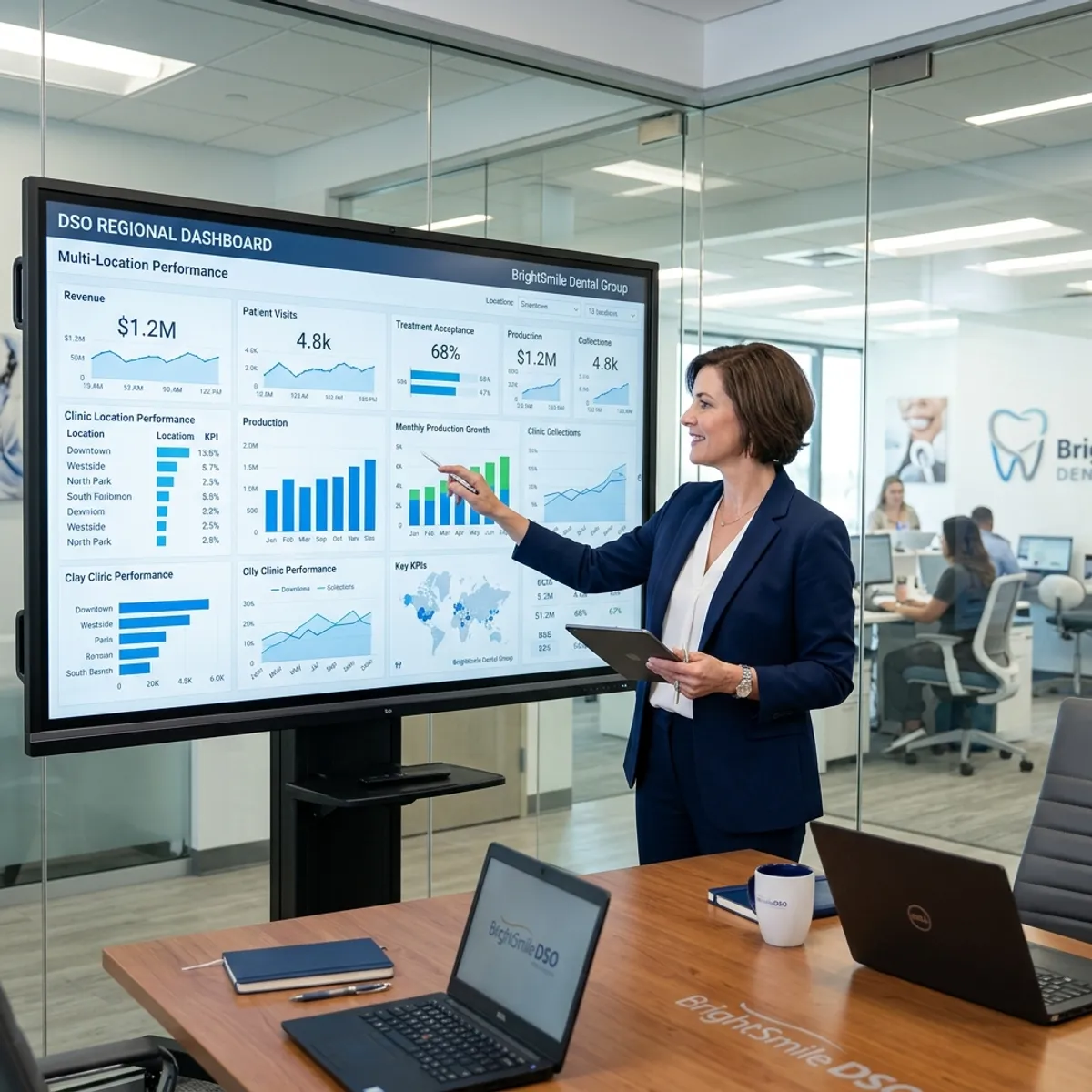
Running one practice and running twenty are different problems. A DSO or growing group needs more than good single-office software multiplied; it needs systems built to standardize, centralize, and scale across locations.
Here is what group practices need from their software that single locations do not, and where the differences really matter.
Quick Answer
DSO dental software needs to do two things well: standardize patient experience and front-desk operations across every location, and provide centralized analytics so group leadership can see performance across the portfolio without manual reporting.
What is different about software needs at a DSO?
A single practice optimizes for its own operations. A DSO optimizes for consistency and visibility across many practices. The software has to support standardized workflows so every location runs the same way, centralized data so leadership sees the whole picture, and scalable configuration so adding a location does not mean rebuilding everything.
The single-office concerns, scheduling, billing, charting, still apply, but the group layer is what defines DSO software.
Why does centralized data matter for groups?
Leadership cannot manage what it cannot see. With siloed per-location systems, getting a group-wide view means manually pulling and combining data, which is slow and error-prone.
Centralized data gives leadership a single, current view across all locations, with the ability to drill into any one. That visibility is what lets a group manage by exception, spotting which locations need attention rather than guessing.
What should DSO software standardize?
Standardization is where groups gain efficiency and consistency.
- Scheduling rules and appointment types across locations
- Front office workflows like call handling and recall
- Billing and insurance processes
- Patient communication standards and brand voice
- Reporting and KPIs so locations are comparable
- Automation configured once and deployed everywhere
How does automation scale across a DSO?
For a group, automation is most valuable when it can be configured centrally and applied across locations. An AI receptionist deployed group-wide means every location answers every call consistently, around the clock, without staffing each front desk separately.
The AI Dental Receptionist scales this way: one consistent standard of call handling and booking across the whole group, integrated with each location's schedule. Recall, verification, and communication automation deploy the same way, so the group operates to a single standard without per-office reinvention.
How does a DSO measure and compare locations?
Group-level analytics with per-location drill-down is essential. Leadership needs to see each location's production, schedule density, new patients, and recall effectiveness, comparable across the portfolio.
That benchmarking reveals which locations outperform and why, so the group can spread what works. It also surfaces which locations are struggling early enough to intervene. Managing a portfolio of practices requires seeing them all on the same dashboard.
Frequently Asked Questions
What is the difference between DSO software and regular practice management software?
Can a single practice management system work across multiple locations?
How does an AI receptionist work for a DSO?
What should DSO leadership be able to see?
See PatientXpress in action
Book a 20-minute demo and see how our platform answers calls, books appointments, and runs your practice automations inside the software your team already uses.
Book a Demo