Quick Answer
Dental treatment planning software helps clinicians sequence and visualize a patient's full course of care, from diagnosis through completion. It organizes treatment into logical phases, models clinical sequencing, supports visual presentation to the patient, and connects to scheduling and financial estimates. Strong treatment planning software improves both clinical organization and case acceptance, because patients who understand the full plan and its sequence are more likely to commit to it.
Treatment planning sits at the intersection of clinical judgment and patient communication. The clinical side is sequencing care correctly. The communication side is presenting it so the patient understands and accepts it. Good software supports both.
Here is what dental treatment planning software does, how it differs from basic treatment plan estimates, and what to look for.
What is dental treatment planning software?
It is software that helps clinicians build, sequence, and visualize a patient's complete course of treatment. Beyond listing procedures and costs, it models the clinical order of care, organizes treatment into phases, and supports presenting the plan visually.
The emphasis is on the plan as a clinical roadmap, not just a financial estimate. That distinction matters for complex cases involving multiple visits, multiple disciplines, or staged treatment.
How is it different from treatment plan estimate software?
A treatment plan estimate focuses on cost: what each procedure costs and what insurance covers. Treatment planning software focuses on the clinical plan: what gets done, in what order, across how many visits, and why.
The best tools do both, pairing clinical sequencing with clear financial estimates so the patient sees both the care roadmap and the cost path together.
Why does sequencing matter for case acceptance?
Large treatment plans can overwhelm patients. A list of ten procedures with a big total often produces hesitation or a flat no. The same treatment, sequenced into clear phases with a logical order and a manageable next step, feels achievable.
Phasing also lets patients start. A patient who commits to phase one is far more likely to complete the full plan than one who was asked to accept everything at once.
What features should treatment planning software include?
Look for the features that support both the clinical and acceptance sides.
- Phased sequencing of treatment across visits
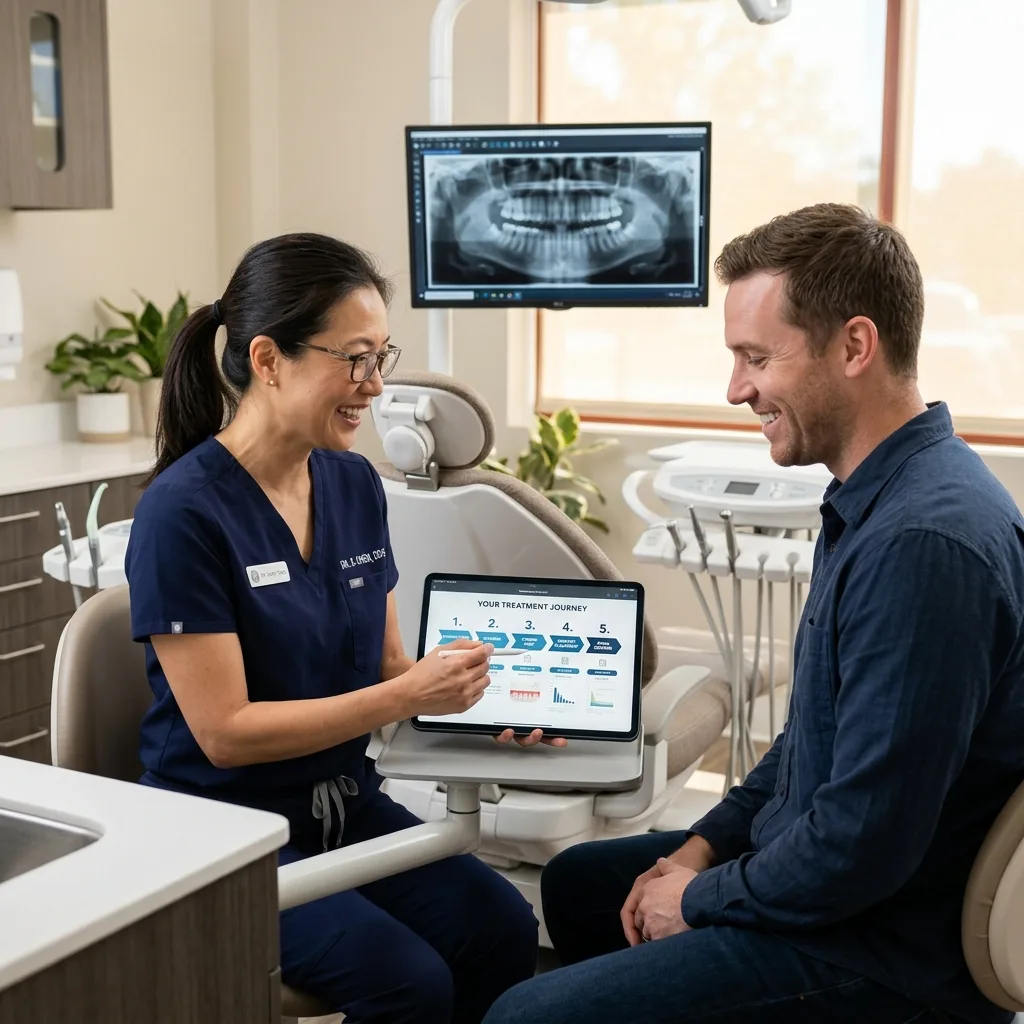
- Visual presentation tools for chairside discussion
- Integrated financial estimates with insurance breakdowns
- Support for multi-disciplinary and staged cases
- Connection to scheduling so accepted phases get booked
- Tracking of plan progress and outstanding treatment
How does it connect to scheduling and follow-up?
A treatment plan only produces revenue when it gets scheduled and completed. The most effective software connects acceptance directly to scheduling, so the next phase gets booked before the patient leaves.
For treatment that is accepted but not yet scheduled, automated follow-up keeps it from being forgotten. The AI Dental Receptionist can handle the scheduling conversation when those patients respond, booking the outstanding phase into the practice management software.
Frequently Asked Questions
See the AI Dental Receptionist in action
Book a 20-minute demo and watch it answer calls, book appointments, and run reactivation campaigns inside your practice management software.
Book Your Free Demopatientxpress.us | 949-542-6773