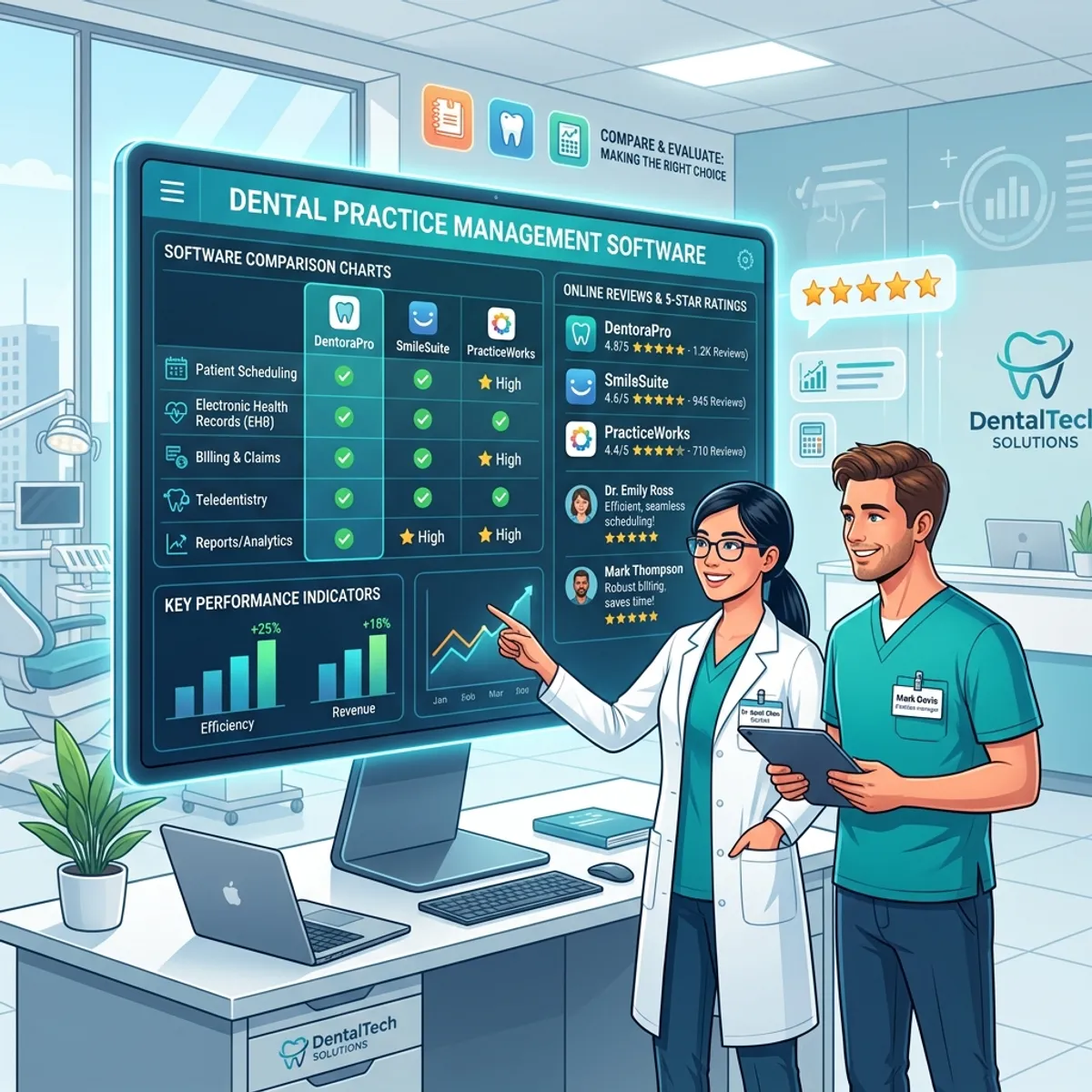
AI Generated Graphic
Quick Answer
Read dental software reviews for repeated patterns rather than star averages: recurring complaints about support, billing, or reliability are signal, while isolated raves and rants mostly measure the reviewer. Weight recent reviews heavily, know which platforms incentivize positivity, and treat reviews as one input that structured demos and reference calls must confirm.
What are software reviews actually good for?
Two things reviews do well: surfacing chronic operational issues, because support that ignores tickets or billing that surprises customers generates the same complaint from unrelated practices over months, and conveying texture about daily use that no demo shows. A reviewer describing exactly how the reminder system handled a snow-day reschedule wave tells you something a feature page never will.
What reviews do poorly is verdicts. A star average blends practices of every size, system, and expectation into one number that describes none of them.
How do you separate signal from noise?
Read twenty reviews and count themes, ignoring the scores entirely. Three independent mentions of the same failure is a finding; one furious essay is a Tuesday. Weight the last twelve months over everything older, because software companies change fast in both directions. Note which reviews describe practices like yours, since a DSO's complaint about enterprise reporting may be irrelevant to a two-op office, and vice versa.
Finally, read the vendor's responses to negative reviews. Defensive or absent responses are themselves data about what support will feel like when you are the unhappy one.
What biases shape which reviews exist at all?
Review populations are never neutral samples. Some platforms gather reviews through vendor-driven campaigns that oversample happy moments; frustration, meanwhile, motivates unprompted reviews far more than satisfaction does. Timing skews things too, since reviews cluster at go-live enthusiasm and at cancellation anger, with the long quiet middle underrepresented.
None of this makes reviews useless. It makes them a source to be read with the same skepticism you would apply to any evidence someone assembled for you.
What questions can reviews never answer?
The ones that decide your outcome: how the product behaves against your practice management system, your call volume, your team. Those answers come only from the structured demo scenarios and reference conversations in our comparison method, run against your real week. Reviews shortlist; they do not select.
Our own standing invitation reflects that belief. We would rather show PatientXpress booking a live appointment into your actual Open Dental schedule, or through Kolla into Dentrix, Eaglesoft, and other systems, than be chosen on stars. Watch the workflow, then decide.
What does a review-reading worksheet look like in practice?
Make the pattern-reading concrete with a simple tally. Columns: support responsiveness, billing surprises, reliability and bugs, data and integration issues, ease of use, and outcome claims. Read the twenty most recent reviews per product and tick the columns, positive and negative separately, noting practice size where visible. Thirty minutes per product produces a themed comparison no star average can offer.
The worksheet also disciplines the reading itself. It forces attention to what reviewers actually said rather than the emotional temperature of how they said it, and it makes the final comparison auditable: when a partner or associate asks why a product fell off the list, the tally answers with evidence rather than vibes.
How should practices contribute reviews responsibly?
The review commons works when practices that benefit from it feed it. Contribute after real experience, a year in, not the go-live honeymoon, and write the review you wished existed: practice size and system context, what works daily, what disappointed, and how support behaved when something broke. Update it if the story changes materially, since stale praise and stale complaints both mislead the next reader.
Skip the incentive traps in both directions: vendor-prompted reviews written for a gift card, and rage reviews written mid-dispute. The genre's value depends on ordinary practices telling the ordinary truth, and every honest contribution raises the quality of the next practice's decision.
Frequently Asked Questions
See the AI Dental Receptionist in action
Book a 20-minute demo and watch it answer calls, book appointments, and run reactivation campaigns inside your practice management software.
Book Your Free Demopatientxpress.us | 949-542-6773