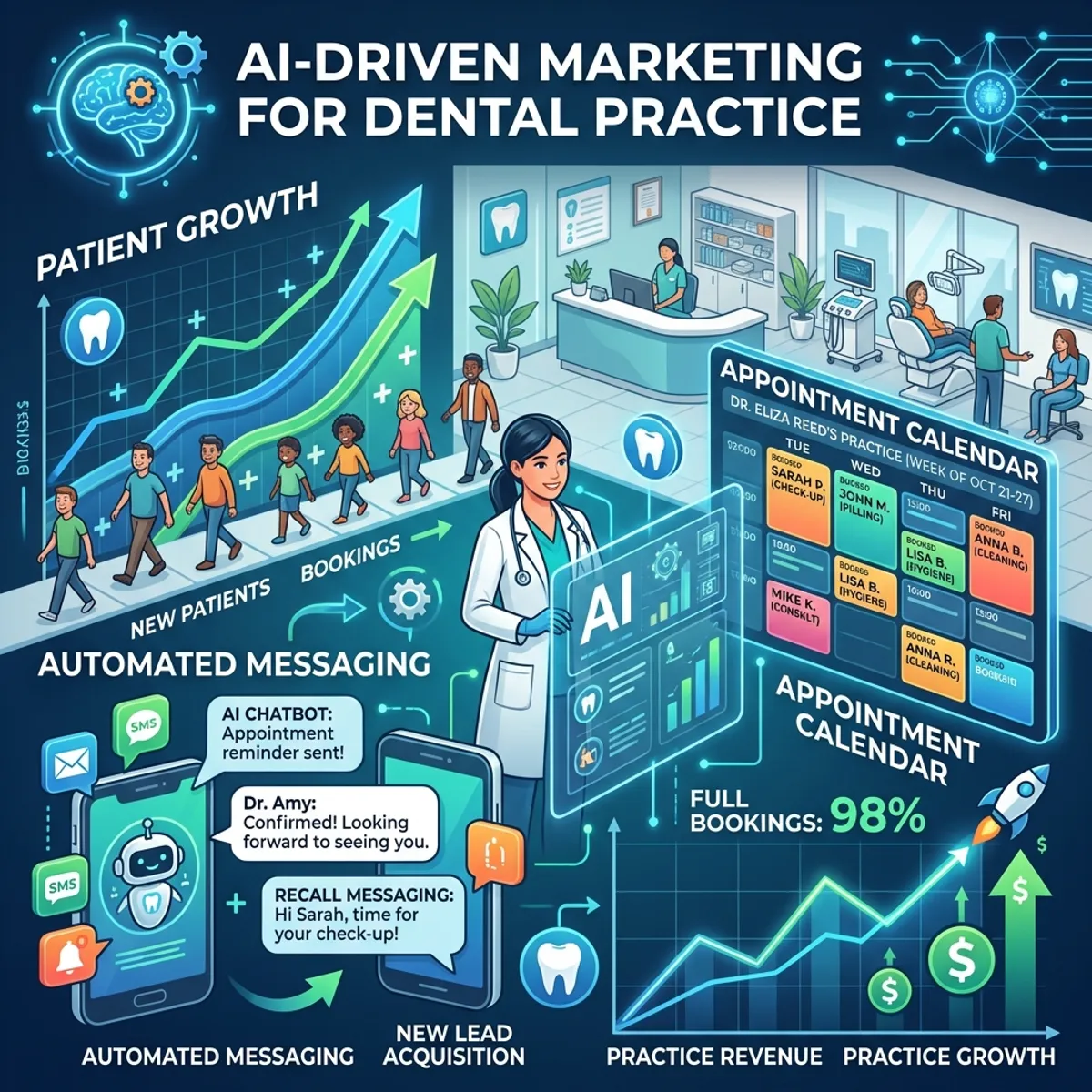
AI Generated Graphic
Quick Answer
The highest-return automation sequence for a dental practice is phones first, because unanswered calls are lost revenue with no recovery path, then appointment reminders and confirmations, then insurance verification, then payment collection, then recall and reactivation outreach. Each step removes a category of manual work and compounds with the ones before it.
Why automate in a sequence rather than all at once?
Because adoption is the constraint, not technology. A team handed five new automated workflows in one month will trust none of them; a team that watches the phones get answered flawlessly for six weeks will ask what else can run this way. Sequencing also respects dependency: automated reminders work better when the reschedule calls they generate get answered, and payment automation works better when verification has already made the amounts accurate.
The order below ranks by a blend of payoff, ease, and how much each step sets up the next.
Why do phones come first?
Every other manual task in the practice degrades gracefully. A reminder sent late still mostly works; a verification done at check-in is slow but survivable. A missed call has no graceful degradation: the caller is gone, often to the next practice on the search results, and no process later in the day recovers them. The phone is also the automation with the cleanest before-and-after, since answered rates and booked appointments are countable from week one.
The AI Dental Receptionist answers every call, books directly into the live schedule, and covers the hours and rushes no staffing plan reaches. Practices consistently report the same second-order effect: with the phones covered, every subsequent automation conversation gets easier, because the team has seen the model work.
What do the middle steps look like?
Reminders and confirmations come second: pure schedule-driven repetition that software does more reliably than people, with confirmations writing themselves back to the calendar. Insurance verification comes third, moving hold-time hours out of the front desk while making every downstream financial step accurate. Payment automation is fourth, converting that accuracy into checkout collection, text-to-pay, and automatic posting.
Each of these steps is boring by design. Automation earns trust precisely by making formerly stressful work uneventful.
What comes after the basics, and what should stay human?
Fifth is proactive outreach: recall, reactivation, and unscheduled treatment follow up running against live schedule data, which turns the patient base from a static list into a managed pipeline. Beyond that, automation extends into documentation with AI clinical notes and voice perio charting, and into the searchable call record with transcribing.
What stays human is everything automation exists to protect: the chairside conversation, the difficult financial discussion, the judgment call on the anxious patient. PatientXpress draws that line deliberately across the platform, natively on Open Dental and through Kolla elsewhere: systems carry the routine, people carry the relationship.
How do you bring the team along at each step?
Automation succeeds socially before it succeeds technically. The pattern that works: before each step, name the tedium it removes rather than the technology it adds, since teams welcome losing hold music far more than they welcome new systems. During rollout, pick the team member most skeptical and make them the reviewer, because converted skeptics carry more credibility than enthusiasts. After two weeks, show the numbers publicly: calls answered, confirmations logged, verifications cleared.
The sequencing itself is a team strategy. Each completed step is evidence for the next one, and by the third, the dynamic typically inverts: instead of automation being proposed to the team, the team starts proposing what should be automated next, which is the culture the whole sequence was quietly building.
What does the before-and-after look like in staff hours?
Tally the manual versions honestly across a week: phone triage and voicemail returns, confirmation calling, verification hold time, payment posting and statement runs, and recall list building commonly sum to twenty or more front-desk hours weekly in a two-doctor practice. The automated sequence absorbs the large majority of those hours, not by working faster but by removing the work's existence.
Where the hours go next is the owner's decision, and the good options compound: treatment follow-up that fills the schedule, unhurried patient conversations that raise acceptance, and the accumulated deferred projects every practice carries. The practices disappointed by automation are usually the ones that never decided what the recovered hours were for; the delighted ones spent them on purpose.
Frequently Asked Questions
See the AI Dental Receptionist in action
Book a 20-minute demo and watch it answer calls, book appointments, and run reactivation campaigns inside your practice management software.
Book Your Free Demopatientxpress.us | 949-542-6773