Quick Answer
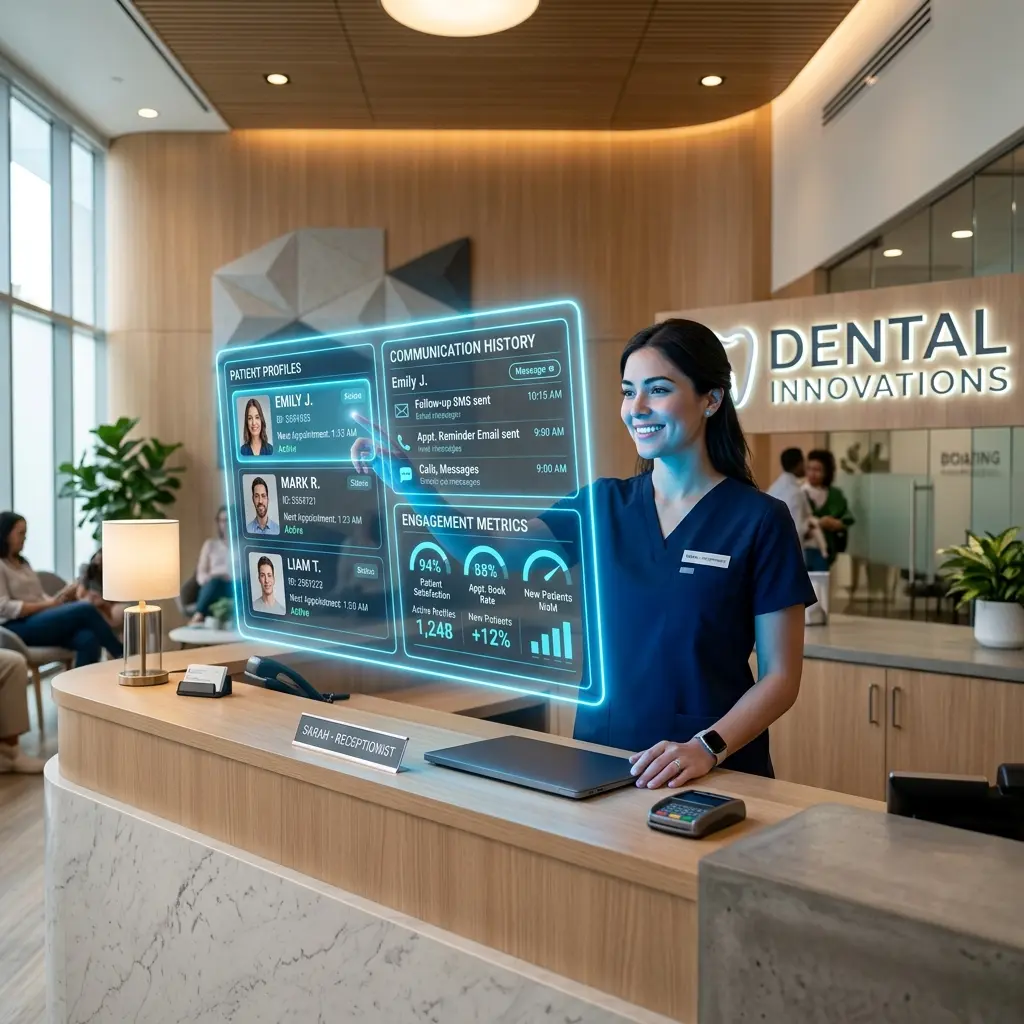
A dental CRM (customer relationship management system) manages a practice's relationships and communication with patients across the entire lifecycle, from first inquiry through recall and reactivation. Unlike a practice management system, which is built around clinical and billing records, a dental CRM is built around communication and engagement: tracking leads, automating outreach, managing recall, and measuring which efforts bring patients in. Modern dental CRMs increasingly use AI to run that outreach automatically.
The term CRM comes from outside dentistry, but the problem it solves is universal: keeping track of every patient relationship and making sure no one falls through the cracks. In a dental practice, that means new patient inquiries, recall due dates, unscheduled treatment, reactivation, and the dozens of communication touchpoints in between.
A dental CRM organizes all of that. Here is what it is, how it differs from your practice management system, and why AI is changing what it can do.
What is a dental CRM and how is it different from a PMS?
A practice management system is built around the clinical and financial record: charts, schedules, ledgers, claims. A dental CRM is built around the relationship: leads, communication history, engagement, and the outreach that moves patients through their lifecycle.
They overlap and increasingly integrate, but they answer different questions. The PMS answers what happened clinically and financially. The CRM answers who needs to hear from us next and what we should say.
What does a dental CRM manage?
A dental CRM tracks and automates the relationship-facing parts of the practice.
- New patient leads and where they came from
- Communication history across calls, texts, and emails
- Recall and recare due dates with automated outreach
- Unscheduled treatment follow-up
- Reactivation campaigns for lapsed patients
- Reviews and reputation outreach after visits
Why are dental practices adopting CRMs now?
Two forces. First, patient acquisition has gotten more expensive and competitive, which makes retaining and reactivating existing patients more valuable. A CRM is how you systematically work the patient base you already have.
Second, AI has made the outreach itself automatable. The historical problem with CRMs was that someone still had to do the outreach. Now the system can run the calls and texts itself, which is what finally makes the CRM deliver on its promise.
How does AI change the dental CRM?
AI turns the CRM from a system that reminds your team to do outreach into a system that does the outreach. Recall sequences run automatically. Lapsed patients get reactivation campaigns without anyone triggering them. Unscheduled treatment gets followed up continuously.
The AI Dental Receptionist sits at the front of this, handling the inbound and outbound conversations the CRM generates, and booking the resulting appointments directly into the practice management software.
What should I look for in a dental CRM?
Look for integration with your practice management software first, since a CRM disconnected from your clinical and scheduling data creates double entry. Then look for built-in automation, ideally AI-driven, so outreach actually happens. Finally, look for reporting that shows which efforts bring patients in, so you can see what is working.
Frequently Asked Questions
See the AI Dental Receptionist in action
Book a 20-minute demo and watch it answer calls, book appointments, and run reactivation campaigns inside your practice management software.
Book Your Free Demopatientxpress.us | 949-542-6773