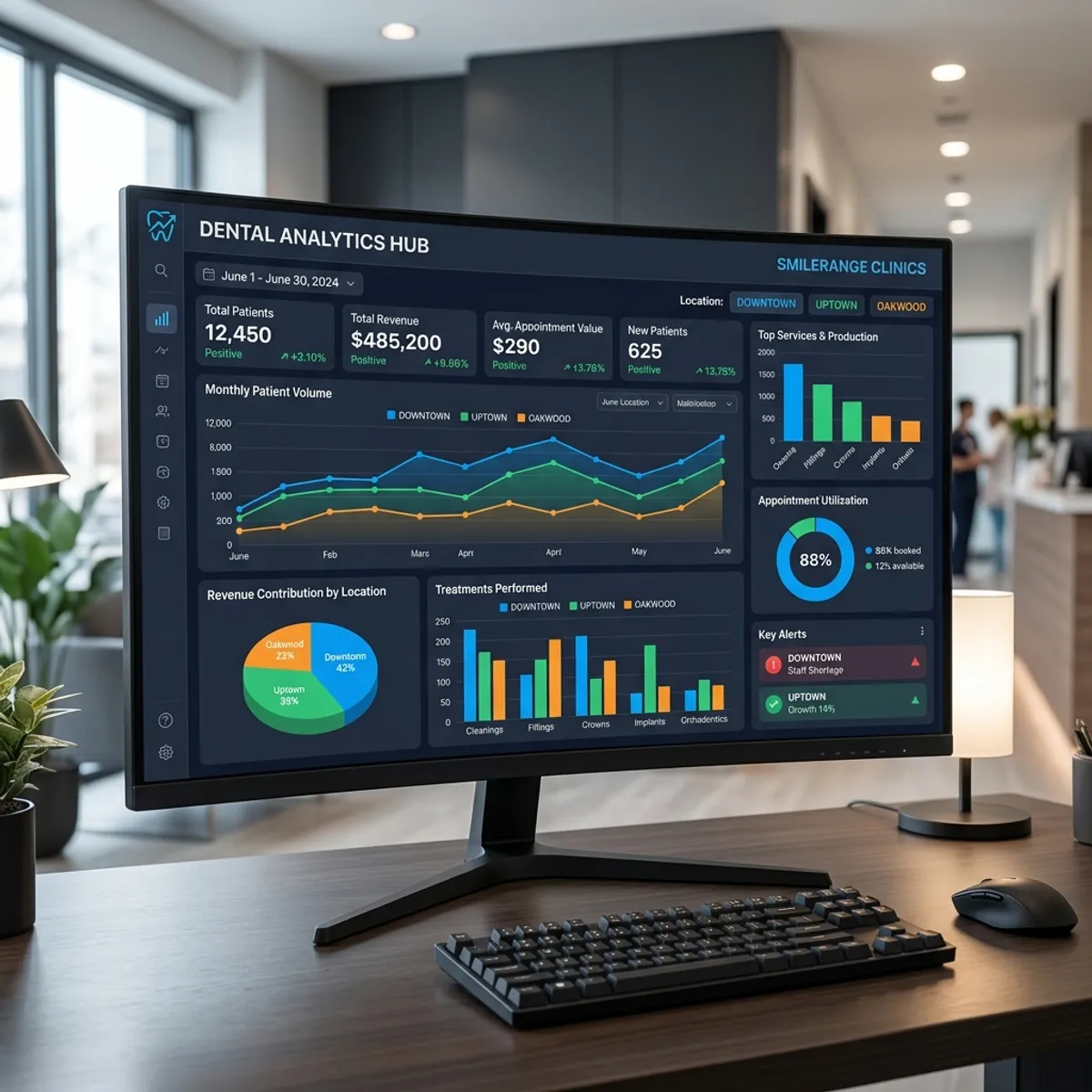
AI Generated Graphic
Quick Answer
Dental call tracking software records where inbound calls originate, what happens on each call, and whether the call converted to an appointment. It turns the phone from a black box into a measurable channel, revealing both which marketing produces calls and how much demand the practice loses to unanswered or unconverted calls.
What does call tracking actually measure?
Three layers. Source: which ad, listing, or campaign made the phone ring, typically via distinct tracking numbers per channel. Handling: whether the call was answered, how long it waited, and what was discussed, which modern systems capture through recording and transcription. Outcome: whether the caller booked, and if not, why.
Most practices have never seen these numbers, and the first report is usually a shock in both directions: marketing channels performing better than assumed, and a share of answered calls quietly failing to convert.
Why is the phone the most under-measured channel in dentistry?
Practices measure their websites obsessively and their phones not at all, even though the phone converts at far higher rates and carries most new patient volume. The reason is historical: web analytics came free with the web, while phone analytics required hardware and effort. So decisions about staffing, training, and marketing spend have run for years on anecdote.
Call tracking closes that gap. When you can see that a channel produced forty calls and eleven bookings, or that Tuesday lunchtime reliably sends callers to voicemail, the conversation shifts from impressions to arithmetic.
How do recording and transcription change the picture?
Counting calls tells you volume. Hearing them tells you why the numbers are what they are: the insurance question that stumps the desk, the price shopper who needed a different framing, the reschedule that turned into a cancellation because no alternative was offered. Transcription makes all of it searchable, so patterns surface without anyone listening to hours of audio.
PatientXpress builds this in through call transcribing: every patient call recorded and transcribed into a searchable record, tied to the patient and the outcome. The phone becomes a channel you can study, coach from, and improve.
What do practices do with what they find?
The findings sort into two buckets. Marketing findings reallocate spend toward the channels that produce booked patients rather than mere calls. Operations findings fix the leaks: the uncovered hours, the scripts that lose price shoppers, the call types worth automating entirely. The largest leak is usually the simplest, which is calls that never get answered at all, and that one has a direct fix in the AI Dental Receptionist answering every call and booking against the live schedule.
Measurement without action is trivia. The point of tracking the phone is that almost everything it reveals is fixable.
How do you set up call tracking without breaking your listings?
The implementation details determine whether tracking helps or hurts. The practice's primary number stays the published number everywhere consistency matters, especially the Google Business Profile, while tracking numbers deploy where attribution matters: distinct numbers per ad campaign, and dynamic number insertion on the website that shows each visitor a number tied to how they arrived. Calls forward invisibly to the real line, and the source data rides along.
Set it up once, correctly, and the reporting runs itself. Set it up carelessly, with tracking numbers scattered across directories, and you trade attribution for listing inconsistency. Reputable platforms have long since solved this; the practice's job is simply to insist the standard pattern is followed.
What does a monthly phone review meeting look like?
Thirty minutes, three questions, real calls. Where did booked patients come from, reviewed against spend, which reallocates next month's budget in minutes. Where did calls leak, with the unanswered and unconverted counts broken out by day and hour, which drives coverage and training decisions. And what did the calls teach, with two or three transcripts pulled: one great save worth celebrating and repeating, one loss worth a script adjustment.
The meeting works because the phone stops being anecdote. When the office manager can say 'Tuesdays from noon to one we missed eleven calls last month,' the fix designs itself, and next month's meeting checks whether it worked.
Frequently Asked Questions
See the AI Dental Receptionist in action
Book a 20-minute demo and watch it answer calls, book appointments, and run reactivation campaigns inside your practice management software.
Book Your Free Demopatientxpress.us | 949-542-6773