Quick Answer
A lot of case-acceptance effort goes into the follow-up — the text reminder, the phone call two weeks later, the reactivation campaign. All of that matters, but it's working uphill if the first conversation, at chairside, right after the exam, was rushed, full of clinical jargon, or handed off to the front desk to explain the cost separately. The moment a patient first hears "here's what we found and here's what it costs" does more to determine acceptance than almost anything that happens afterward.
Behavioral research on decision-making consistently shows that the first piece of information someone receives about a decision shapes how they evaluate everything that follows — a concept usually called anchoring. Applied to a treatment plan, that means a patient's gut reaction in the first thirty seconds of hearing about a crown, an extraction, or a full-mouth reconstruction largely sets whether they're mentally leaning toward "yes, let's figure this out" or "this feels like too much, I need to think about it" — and a lot of what happens after that initial reaction is the patient looking for information that confirms whichever way they already leaned.
That's not a reason to sugarcoat a diagnosis. It's a reason to be deliberate about how the first few sentences of a treatment conversation are structured, rather than treating it as an afterthought squeezed into the last minute of an exam.
Where Chairside Presentations Commonly Go Wrong
A few patterns show up again and again in practices that struggle with case acceptance. Clinical jargon is the most obvious one — a patient who hears "we're seeing interproximal decay on the mesial of tooth 14" has no idea what that means for their life, while a patient who hears "there's a small cavity between two of your back teeth that's starting to grow" understands it immediately.
The second common mistake is separating the clinical conversation from the cost conversation entirely — the dentist explains what's needed, then leaves, and the patient hears the actual number for the first time from a front-desk team member minutes later, sometimes with no connection back to the "why" they just heard. That handoff creates a second decision point where the patient can talk themselves out of something they'd just tentatively agreed to.
The third is speed. A treatment plan explained in ninety seconds while the dentist is already halfway out the door doesn't give a patient room to ask the one or two questions that would have moved them toward acceptance.
What a Better Presentation Looks Like
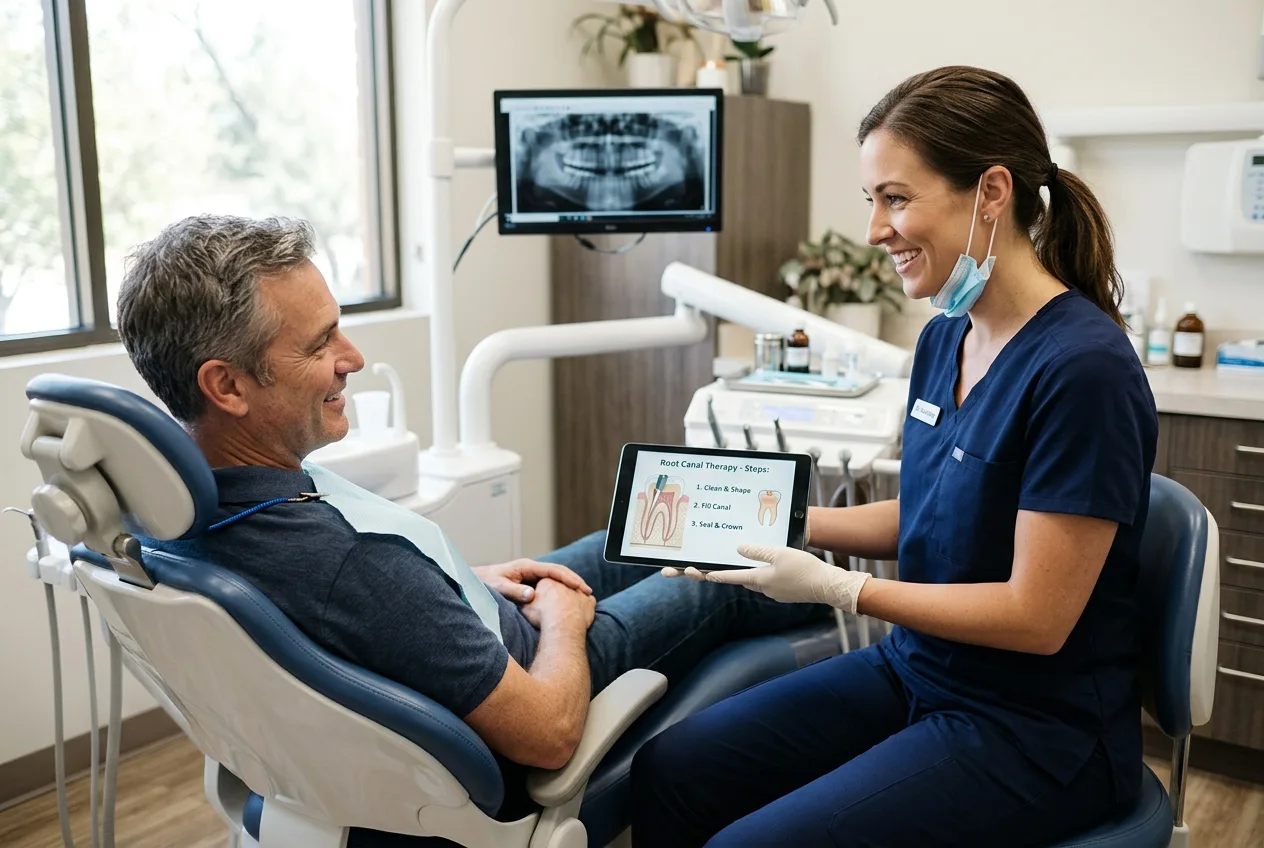
The practices that see stronger chairside acceptance tend to do a few things consistently: they explain findings in plain language before moving to numbers, they use some kind of visual aid — even something as simple as pointing at an X-ray or a diagram rather than describing everything verbally — and they keep the cost conversation connected to the clinical one instead of splitting it across two separate people and two separate moments.
Digital treatment plan tools have made the visual half of this easier than it used to be. A tablet showing a simple before-and-after graphic, an itemized breakdown of what's included, and — critically — an accurate insurance estimate calculated in real time rather than a rough guess, gives the patient something concrete to look at rather than trying to hold a spoken explanation in their head while also processing an unfamiliar number.
Getting the Cost Number Right the First Time
Few things undermine trust in a treatment plan faster than a cost estimate that turns out to be wrong once insurance actually processes the claim. If the number presented chairside is a rough placeholder because real-time insurance verification isn't available yet, patients sometimes accept the plan and then feel misled later when the actual bill differs — which damages trust well beyond that one treatment plan. Automated, real-time insurance verification tied directly into the treatment-plan presentation closes that gap, so the number a patient hears at chairside is the number they should actually expect.
Should the Dentist or a Coordinator Present the Cost?
There's no universal right answer here — some practices do best with the dentist staying in the room for the full conversation including cost, others use a dedicated treatment coordinator who picks up immediately after the clinical explanation without a gap. What matters more than who does it is that the handoff, if there is one, happens smoothly and immediately, with the coordinator already aware of exactly what was just discussed rather than starting from scratch.
Frequently Asked Questions
See PatientXpress in action
Book a 20-minute demo and watch it answer calls, book appointments, and run reactivation campaigns inside your practice management software.
Book Your Free Demopatientxpress.us | 949-542-6773