Quick Answer
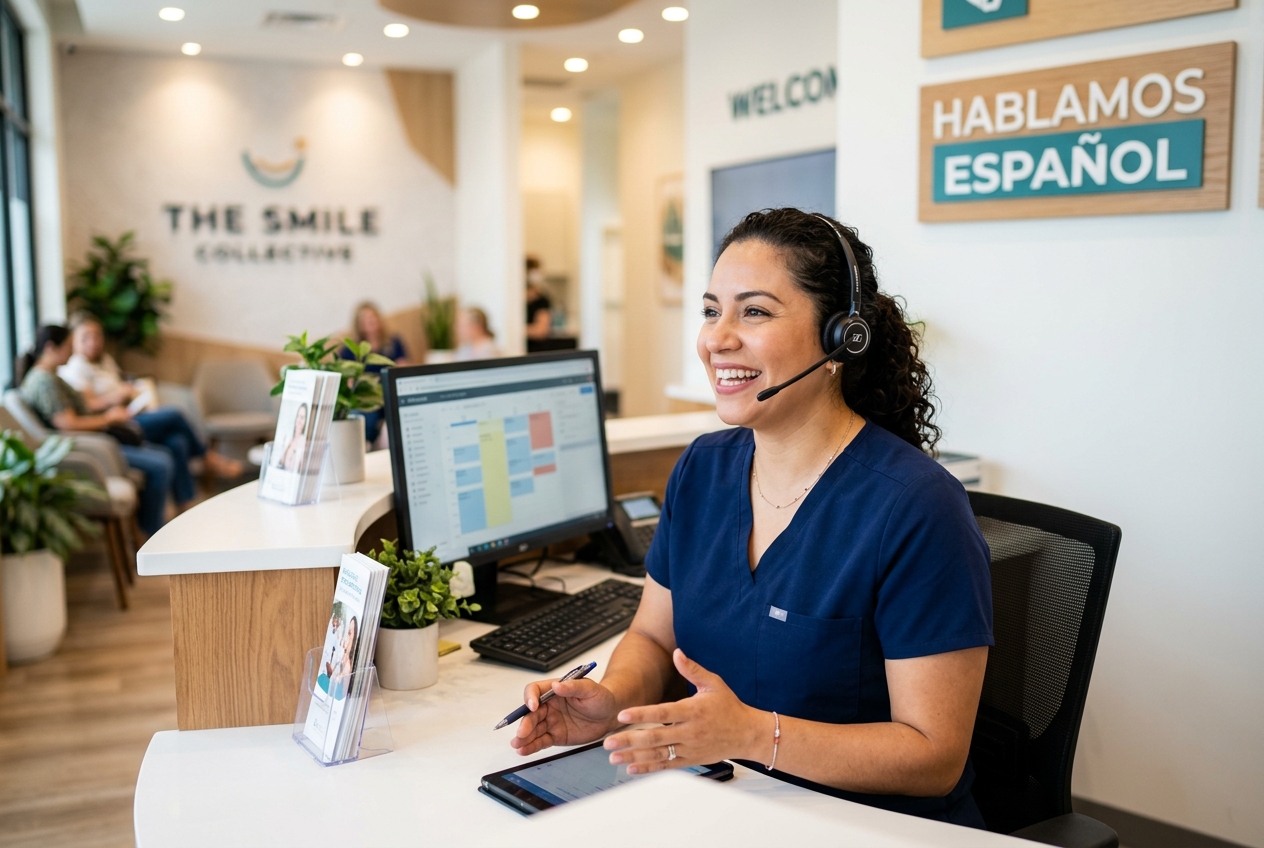
A meaningful share of missed after-hours dental calls come from Spanish-speaking patients who simply hang up rather than navigate an English-only voicemail system or wait for a callback in a language the practice may or may not answer in. Native bilingual AI coverage — not a translated script, but a system that actually operates fluently in both languages — closes that gap without requiring a bilingual staff member scheduled around the clock.
The Staffing Reality Behind This Problem
Finding bilingual front-desk staff isn't hard in many markets — plenty of practices have one or two team members who speak Spanish fluently. The problem is coverage, not availability. A bilingual staff member working a normal shift can't be there for the 7pm call, the Sunday emergency, or the lunch-hour overflow when they're the one who stepped out to eat. Unless a practice is large enough to staff bilingual coverage across every shift, there are inevitably windows where a Spanish-speaking caller reaches either an English-only voicemail or nobody at all.
Why "Translated Scripts" Aren't the Same Thing
Some systems handle language coverage by running the same English decision tree through a translation layer. That approach usually breaks down the moment a caller says anything outside the expected script — describing pain in their own words, asking a question the script didn't anticipate, or code-switching between English and Spanish mid-conversation, which is common and natural for many bilingual callers. Native bilingual AI is a different design entirely — the system operates in Spanish the same way it operates in English, understanding natural phrasing rather than matching against a translated script.
What This Looks Like on an Actual Call
A caller describing a toothache in Spanish, at 8pm, needs the same thing an English-speaking caller in the same situation needs — someone that understands the urgency, can check the actual schedule for an emergency slot, and can offer that appointment on the call itself. If the system can only manage that experience in English, the Spanish-speaking caller is functionally getting a worse version of the practice's service — it's a coverage gap, not a values gap, but it has the same effect on the patient's experience either way.
The Access-to-Care Angle
Language barriers are a documented factor in delayed or avoided healthcare visits across many patient populations, and dental care is no exception. A practice that can genuinely serve a Spanish-speaking caller with the same quality of interaction at 9pm on a Tuesday as at 9am is removing a real barrier to that patient getting seen — which matters both for that individual patient's oral health and, over time, for the practice's reputation and referral base within that community.
Extending Beyond the Phone Call
Bilingual coverage that stops at the phone call is only a partial solution. If a Spanish-speaking patient gets booked successfully but then receives appointment confirmations, intake forms, and reminder texts entirely in English, a meaningful part of the friction just moved further down the patient journey instead of disappearing. The stronger approach extends bilingual support to text communication and digital intake forms as well.
Frequently Asked Questions
See PatientXpress in action
Book a 20-minute demo and watch it answer calls, book appointments, and run reactivation campaigns inside your practice management software.
Book Your Free Demopatientxpress.us | 949-542-6773