Quick Answer
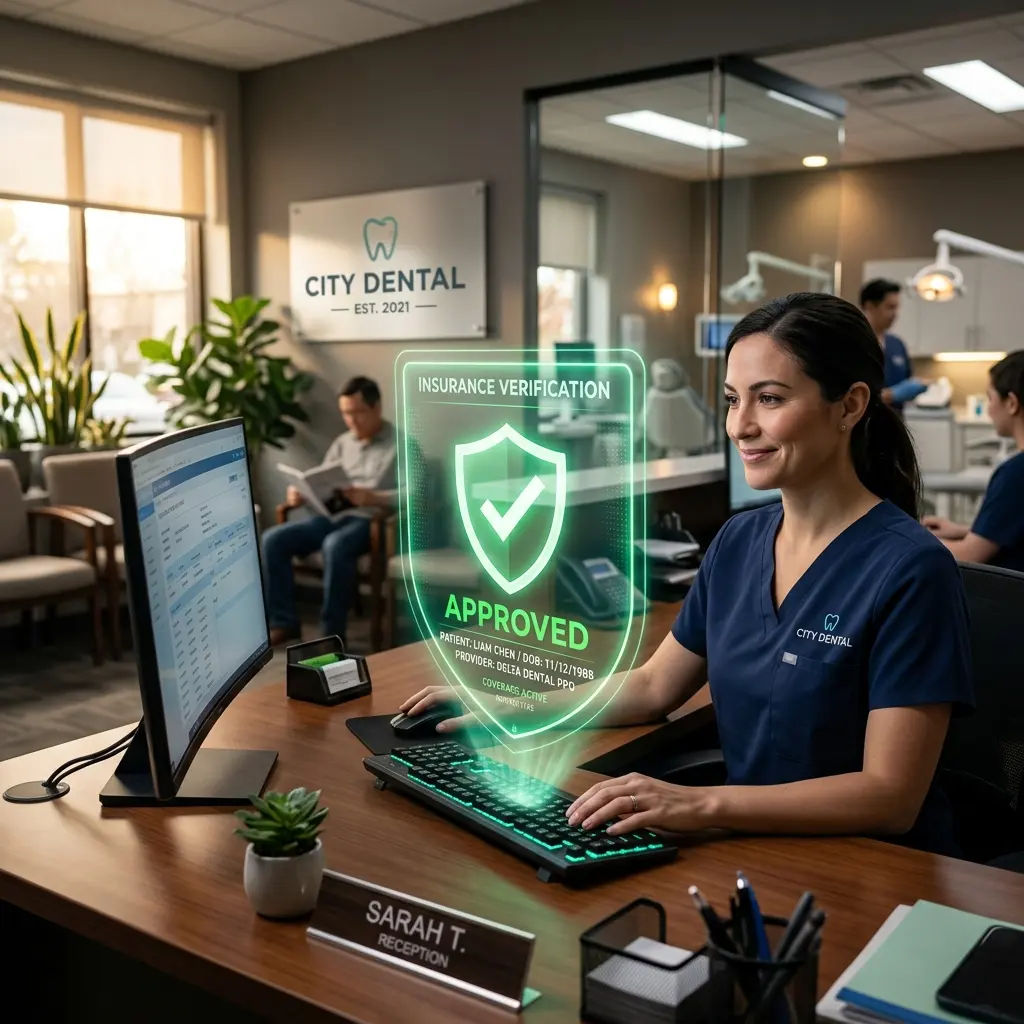
Automated dental insurance verification software checks patient eligibility and benefits before the appointment without a front desk team member calling the insurer. The best systems pull eligibility, plan maximums, deductibles, and coverage breakdowns automatically, flag issues before the visit, and feed the data into the practice management software. Practices using automated verification typically save 10 to 20 front desk hours per week and reduce claim denials tied to eligibility errors.
Insurance verification is one of the most time-consuming and error-prone tasks in a dental front office. Calling insurers, navigating hold queues, and manually keying benefits into the system eats hours every week, and a single missed detail turns into a denied claim weeks later.
Automated dental insurance verification software removes most of that manual work. Here is how it works, what separates the good systems, and what practices typically gain.
What does automated dental insurance verification software do?
It connects to payer systems and clearinghouses to pull a patient's eligibility and benefit details automatically, ahead of the appointment. Instead of a staff member calling each insurer, the software retrieves coverage status, plan maximums, deductibles met, frequency limitations, and procedure-level coverage.
The verified data flows into the practice management software, so the front desk and treatment coordinator see accurate benefits before the patient sits in the chair.
Why is manual insurance verification so costly?
A typical practice verifies dozens of patients a week. Done manually, each verification can take 10 to 20 minutes including hold time. That is easily 10 to 20 hours a week of front desk labor spent on the phone with insurers.
The hidden cost is bigger. Eligibility errors that slip through become denied claims, which means rework, delayed revenue, and sometimes write-offs. Automation reduces both the labor and the downstream denials.
What features separate the best verification software?
Several features distinguish strong automated verification from basic eligibility lookups.
- Full benefit breakdowns, not just active or inactive status
- Procedure-level coverage detail for treatment planning
- Automatic scheduling of verifications ahead of upcoming appointments
- Direct write-back into the practice management software
- Flagging of plan changes, lapses, and frequency limitations before the visit
How does AI improve insurance verification?
AI improves verification in two ways. First, it handles the messy variability of payer responses, normalizing inconsistent data into a clean, readable benefits summary. Second, it can run verification continuously in the background, checking eligibility days before each appointment without anyone triggering it.
The result is that the front desk arrives each morning with verified benefits already attached to the day's patients, instead of spending the morning on the phone.
How does verification connect to the rest of the practice workflow?
Verification is most valuable when it feeds the workflows around it. Accurate benefits inform treatment plan presentation and case acceptance. They reduce surprises at checkout. They cut claim denials.
When verification is integrated with the practice management software and the scheduling layer, the whole front office runs cleaner, and the AI Dental Receptionist can even reference coverage when booking and confirming appointments.
Frequently Asked Questions
See the AI Dental Receptionist in action
Book a 20-minute demo and watch it answer calls, book appointments, and run reactivation campaigns inside your practice management software.
Book Your Free Demopatientxpress.us | 949-542-6773