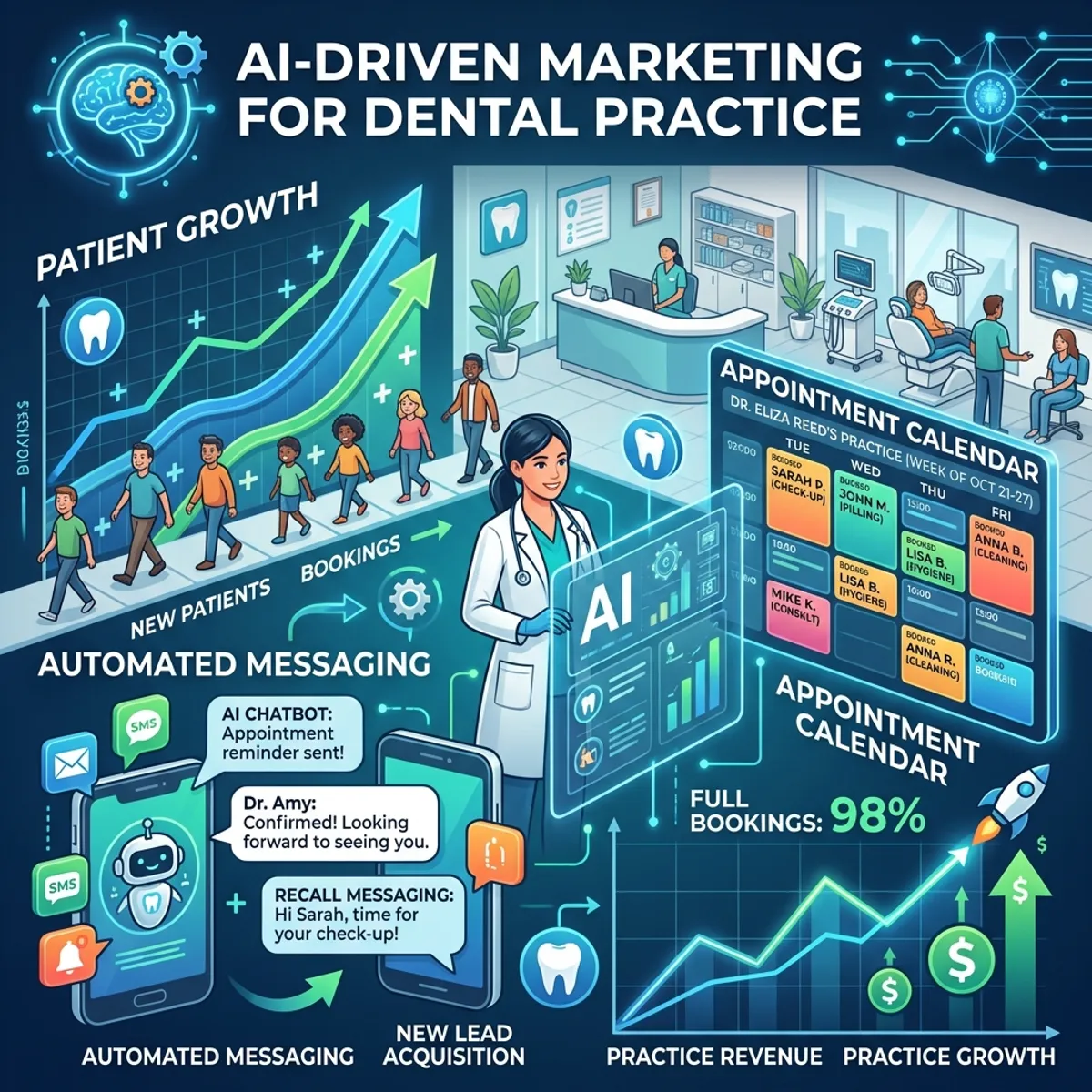
AI Generated Graphic
Quick Answer
AI patient education and communication tools help dental practices explain diagnoses and treatment in plain language, answer routine patient questions instantly, and keep patients informed between visits. They improve case acceptance not by persuasion but by comprehension: patients who understand what is happening and why say yes more often and follow through more reliably.
Where does patient understanding actually break down?
In the gap between clinical language and kitchen-table language. A patient hears a diagnosis chairside, nods, and leaves with a fraction of it retained, which is a documented pattern across healthcare communication research. The treatment plan then competes with imperfect memory, a search engine, and a spouse's opinion, and the case stalls not because the patient disagreed but because they never fully understood.
Education tools exist to close that gap: consistent, plain-language explanation that survives the car ride home.
What can AI genuinely do here?
Three practical things. Translate: turning clinical findings into clear explanations at a reading level and tone the practice sets, consistently, for every patient rather than only when the day allows time. Answer: handling the routine questions patients actually ask, about procedures, preparation, recovery, and logistics, instantly by phone or text instead of joining a callback list. And reinforce: following visits with the right explanation and instructions tied to what was actually discussed.
The phone piece deserves emphasis because it is where question volume really lives. When the AI Dental Receptionist answers, the patient with a question at 7pm gets an answer at 7pm, and the question never becomes tomorrow's interruption.
What should AI patient education never do?
Diagnose, improvise clinical advice, or pressure. The tools work within boundaries the practice defines: explaining the dentistry the dentist prescribed, answering within approved scope, and routing anything clinical or ambiguous to the clinical team. Education is also not marketing in a lab coat; content that shades from explaining into selling erodes exactly the trust that makes education effective.
Practices evaluating these tools should ask to see the boundary behavior directly: what happens when a patient asks something outside scope. The quality of that moment defines the product.
How does better education show up in practice numbers?
In case acceptance first, because understood treatment gets accepted at higher rates than mystifying treatment, and in follow-through second, because patients who know why an appointment matters keep it. It also shows up as subtraction: fewer repetitive question calls interrupting the desk, fewer post-op confusion calls, fewer no-shows born of ambivalence.
None of that requires new persuasion skills from the team. It requires the explanation workload, which was always valuable and never had a home in the schedule, finally having a system that carries it.
What does AI education look like across the patient journey?
Map it to the moments where understanding decides outcomes. Before the first visit: plain answers about what to expect, insurance participation, and logistics, delivered instantly by phone or text when the patient is deciding. Chairside: consistent, visual, jargon-free explanation supporting the dentist's diagnosis. After the visit: the treatment plan restated in kitchen-table language with costs and next steps, arriving while the conversation is fresh. Between visits: answers to the questions that occur at 9pm, handled at 9pm.
Each moment has a failure mode without support: the pre-visit question that became a lost caller, the chairside nod that concealed confusion, the plan that faded on the car ride home. The tools exist precisely because these moments outnumber the team's capacity to staff them all.
How do you configure the boundaries in practice?
Boundary-setting is concrete work, not philosophy. The practice defines the approved scope: which procedures get explained and in what language, which questions have standard answers, what the tone sounds like, and the exact triggers that route to humans, clinical judgment calls, symptoms, complaints, and anything ambiguous. The clinical team reviews the content once, thoroughly, the same way they would train a new coordinator, and revisits it as offerings change.
Then audit the edges periodically: sample real interactions and check the routing fired when it should have. A well-bounded tool is auditable by design, and the review habit is what keeps configured today from drifting into assumed forever.
Frequently Asked Questions
See the AI Dental Receptionist in action
Book a 20-minute demo and watch it answer calls, book appointments, and run reactivation campaigns inside your practice management software.
Book Your Free Demopatientxpress.us | 949-542-6773