Practice Technology

The Real Cost of Running 5 Different Software Tools
in Your Dental Practice

March 7, 2026 3 min read PatientXpress

Key Takeaways

  • A patchwork of disconnected software tools creates inefficiencies and data silos.
  • Toggling between systems wastes labor hours—costing nearly $4,300 per year per employee.
  • Fragmented tools can lead to combined hard and soft costs of $30,000 to $50,000 annually.
  • Integration means your communication, payments, and forms should live natively within your PMS.
  • Consolidation removes friction, reduces subscription fees, and eliminates workflow dropping points.
5+
separate software tools used by the average dental front desk
45 Min
wasted per employee every day toggling between different systems
$4,300
lost in wasted labor per employee annually from system hopping
1
unified platform needed to manage the entire patient journey

The Software Sprawl Trap

Walk into most dental offices and you'll find a patchwork of technology. One platform for scheduling. Another for patient communication. A third for insurance verification. A separate payment processor. And maybe a forms tool duct-taped onto the side.

Each tool has its own login, its own dashboard, its own monthly invoice, and its own customer support line. Your front desk toggles between five or more browser tabs all day long. And every time data has to move from one system to another, there's a chance for errors, delays, and dropped tasks.

Adding Up the True Costs

Most practice owners look at each individual software subscription and think, "It's only $200 a month." But the real cost isn't just the subscription fees. It's the labor.

⚠ The Integration Gap Tax
$30,000+
Annual waste generated by fragmented subscriptions, claim denials from data entry errors, and lost labor hours.

Think about it this way. Your front desk coordinator earning $22 per hour spends an extra 45 minutes per day re-entering data, switching between systems, and troubleshooting integration issues. That's nearly $4,300 per year in wasted labor, per employee. Add in the cost of claim denials from data-entry errors, the revenue lost from communication delays, and the monthly fees for five separate tools, and you're easily looking at $30,000 to $50,000 in annual waste.

For a DSO with 20 locations? Multiply that. The number gets uncomfortable fast.

What Integration Actually Looks Like

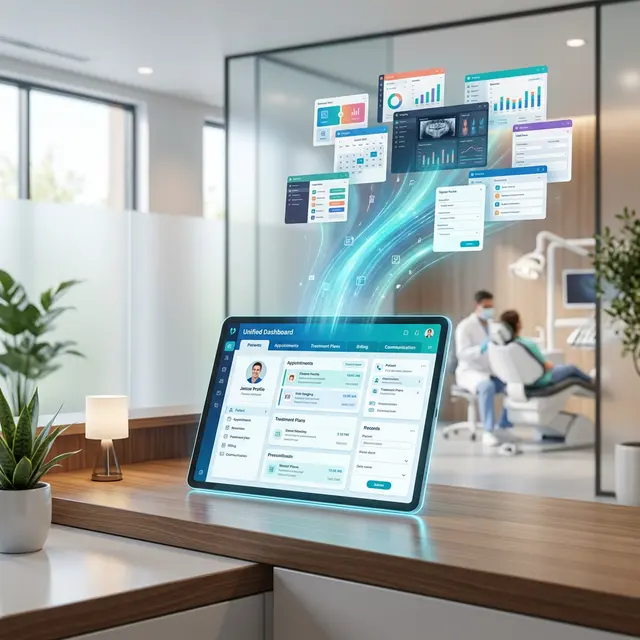
A truly integrated solution means your payment processing, patient communication (texts, emails, reminders), insurance verification, digital forms, and automations all live inside your PMS. Right within Open Dental, for example.

Unified Dental Software Hub Illustration
"It's not about adding more technology. It's about removing the friction between the tools you already need."

Your team doesn't leave the software they already know. Payments post automatically. Insurance eligibility checks happen in real time before the patient even sits down. Forms are completed on a patient's phone and flow directly into the chart. Appointment reminders go out without anyone pressing a button.

The Bottom Line

If your practice is running five different tools to do what one integrated platform can handle, you're not being thorough. You're overpaying. Consolidation isn't just a convenience play. It's a financial strategy.

Ask your team this week: how many logins do you use every day? The answer will tell you exactly how much room you have to improve.

Consolidate Your Software Stack Today

Discover how PX Solutions replaces multiple fragmented tools with one seamlessly integrated ecosystem.

See the Platform in Action