Quick Answer
A 24/7 AI receptionist for dental offices answers every inbound call around the clock, including evenings, weekends, holidays, and during front desk lunch breaks. It books appointments directly in the practice management software, handles new patient inquiries, and runs in English and Spanish. Practices using one typically capture 30 to 50 percent more new patient appointments compared to business-hours-only coverage.
Most dental practices run on the same schedule. The office opens at 8am, the front desk takes lunch from noon to 1pm, the doors close at 5pm, and the weekend is dark. The phones, however, do not run on that schedule. Patient calls come in evenings, weekends, holidays, and during every front desk lunch break that has ever happened.
The 24/7 AI receptionist exists because that gap is expensive. Here is what coverage looks like, how it works, and what practices typically see when they close it.
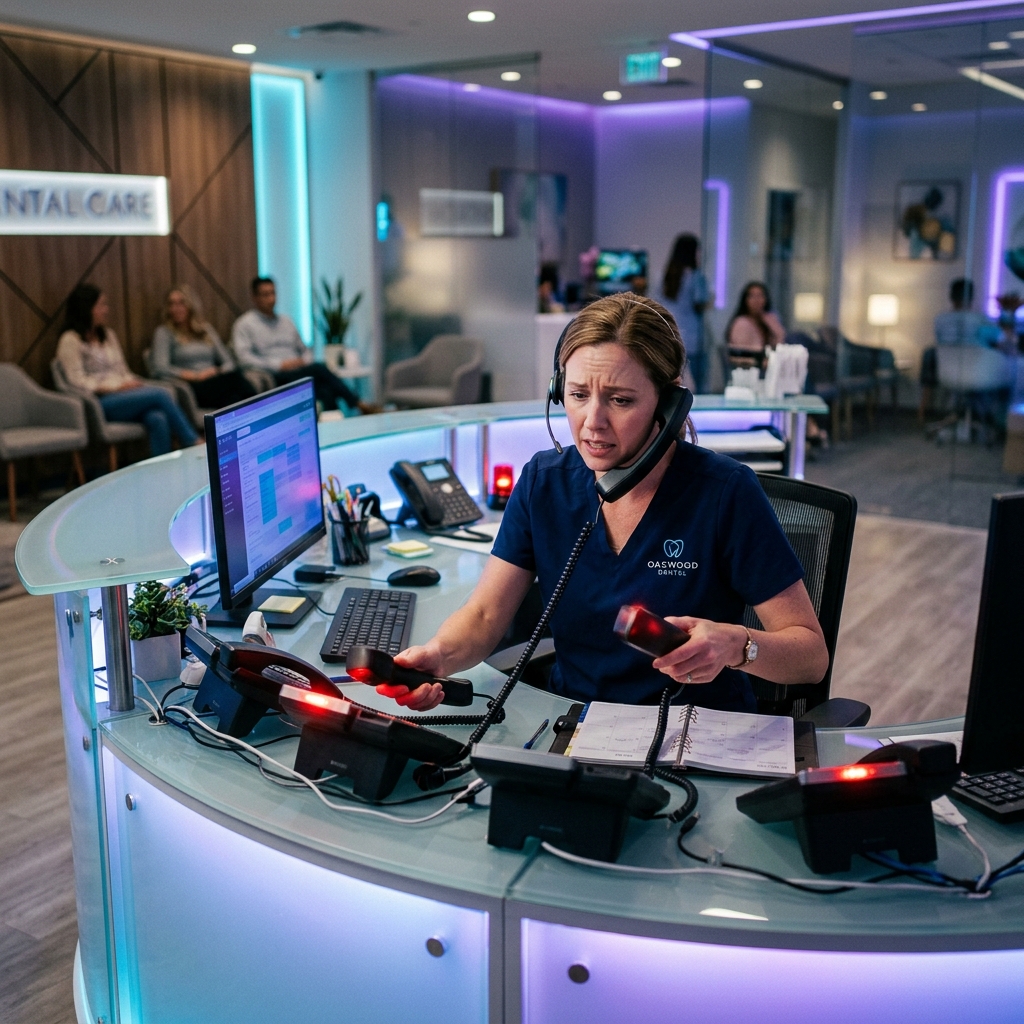
When do dental practice calls actually come in?
Inbound call volume at a dental practice is not evenly distributed across business hours. The peaks tend to fall in three windows: Monday 8am to 10am (the week's first scheduling rush), lunch hour every day, and the 30 minutes immediately after closing time.
Two of those three windows are when the front desk is least available to answer. After-hours call volume varies by practice but typically represents 20 to 35 percent of total weekly call volume. Most of those calls go to voicemail. Most of those callers do not call back.
What does 24/7 AI receptionist coverage look like?
The AI is on the line the moment the call rings, every time, regardless of the clock. For practices that already have front desk staff during business hours, the AI can be configured to answer only when the front desk is unavailable (lunch, after hours, holidays, on another call). Or it can be primary and route to staff when needed.
The patient experience is the same at 2pm on Tuesday and 9pm on Saturday. The AI greets them, books their appointment, confirms by text, and the appointment shows up in the practice management software the front desk will see Monday morning.
What happens to new patient calls after hours?
This is the gain that surprises most practice owners.
New patient calls that come in after hours have a particular dynamic: the caller has decided they need a dentist and is shopping. They are calling multiple offices. The first one to actually answer and get them on the schedule is the one that wins the patient. The ones that send the caller to voicemail get a coin flip at best, and often nothing at all.
A 24/7 AI receptionist turns every one of those after-hours new patient calls into a booked appointment. Practices that add 24/7 coverage typically see new patient volume rise 30 to 50 percent within 60 days.
What about emergencies and complex calls?
The AI is built to recognize the edge of its scope. Genuine dental emergencies (uncontrolled bleeding, severe trauma, swelling that suggests infection) are routed to your emergency protocol immediately. Complex clinical questions or insurance disputes are escalated with a structured message. The AI's job is not to handle every call. It is to handle the ones it can handle well and to triage the rest cleanly.
How does it integrate with the practice management software?
Native integration is what makes 24/7 coverage useful. Every appointment the AI books at 11pm on Sunday is in the practice management software when the front desk opens the schedule Monday morning. Native with Open Dental, broad coverage across Dentrix, Eaglesoft, and other major systems through our integration layer.
There is no separate inbox to check. No after-hours messages to triage. The schedule is just full.
Frequently Asked Questions
See the AI Dental Receptionist in action
Book a 20-minute demo and watch it answer calls, book appointments, and run reactivation campaigns inside your practice management software.
Book Your Free Demopatientxpress.us | 949-542-6773