Quick Answer
When evaluating an AI receptionist for a dental practice, the most important factors are direct PMS integration (not just message-taking), natural voice quality, real-time appointment booking capability, outbound call functionality, HIPAA compliance, and transparent pricing. Ask for a live demo with a real call, not a scripted walkthrough, and verify that the AI can handle your specific practice management software.
The AI dental receptionist market is growing fast, and not every solution delivers the same level of capability. Some products are glorified phone trees with an AI label. Others are legitimate platforms that can transform how a dental practice handles patient communication.
If you are evaluating options, here is what to look for and what to ask before you commit.
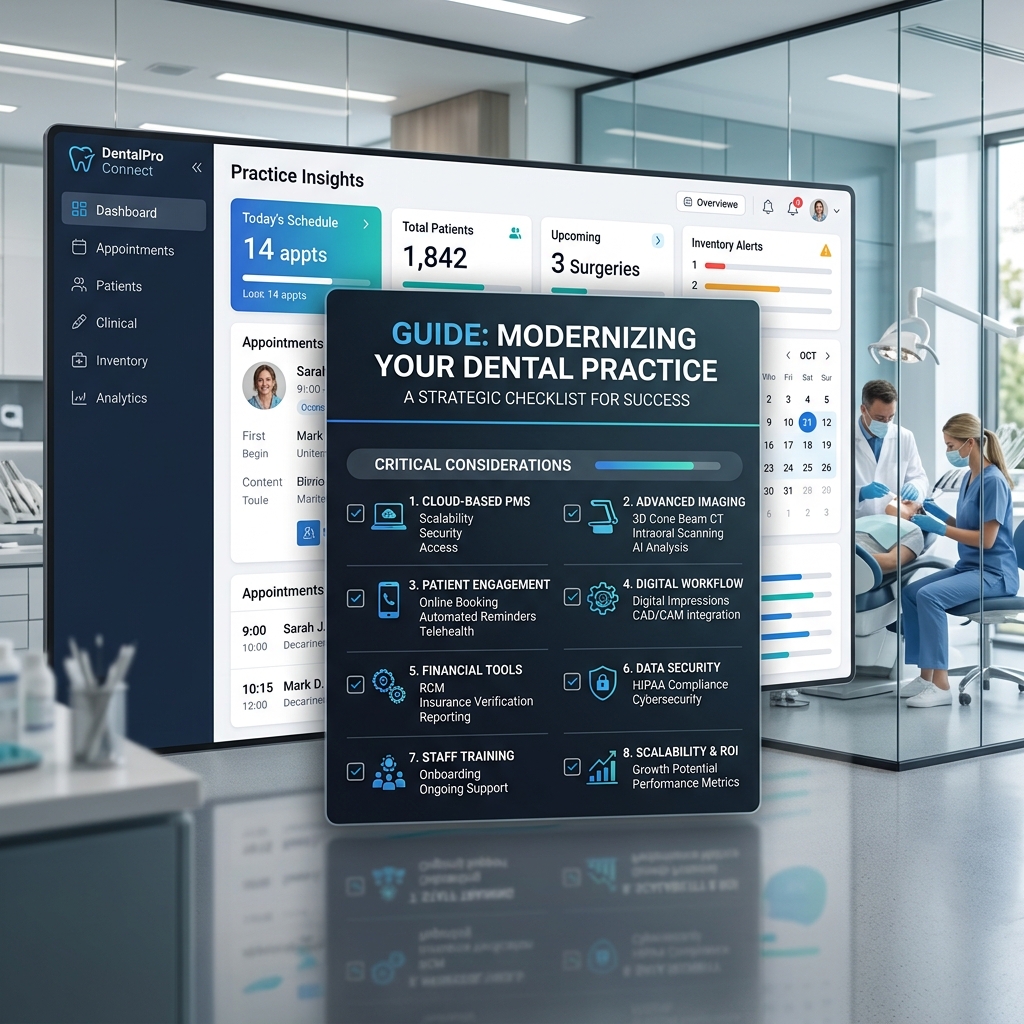
A comprehensive buyer's guide ensures you select an AI that genuinely integrates and scales with your team.
Does It Integrate Directly With Your Practice Management Software?
This is the single most important question. An AI receptionist that cannot read your schedule and book appointments in real time is not a receptionist. It is a message-taking service with a voice interface.
Ask specifically whether the AI connects to your PMS, whether that is Open Dental, Dentrix, Eaglesoft, or another platform. Verify that it can read availability, place appointments on the schedule, and update patient records without manual intervention. If the vendor says integration is coming soon or available through a workaround, that is a red flag.
Can It Handle Outbound Calls, Not Just Inbound?
A lot of AI receptionist products only handle incoming calls. That solves half the problem. The other half, appointment confirmations, recall outreach, ASAP list management, and follow-ups on missed calls, requires outbound capability. Make sure the solution you evaluate can make calls, not just answer them.
What Does the Voice Actually Sound Like?
Ask for a live demo with a real call, not a polished recording or a scripted walkthrough. Listen to how the AI handles interruptions, unusual requests, and conversational turns. A good AI dental receptionist sounds natural and responsive. A mediocre one sounds like a chatbot reading from a script. Your patients will know the difference.
Is It HIPAA Compliant?
Any AI system handling patient information in a dental practice must meet HIPAA compliance standards. Ask the vendor for documentation of their security practices, data handling protocols, and compliance certifications. If they cannot provide clear answers, move on. HIPAA compliance is not optional and it is not something that gets figured out later.
What Does Pricing Look Like?
Understand the pricing model before you sign. Some vendors charge per call or per minute, which means your cost goes up as your volume increases. Others offer flat monthly pricing regardless of call volume. For a busy dental practice, flat-rate pricing is almost always more predictable and more affordable over time.
Ask about setup fees, contract length, and what happens if you need to cancel. A confident vendor will offer flexible terms because they know the product retains practices on results, not contracts.
What Questions Should You Ask in the Demo?
Can you show me a live call, not a recording? How does the AI handle a patient who wants to reschedule and has questions about insurance in the same call? What happens when the AI encounters something it cannot handle? How long does implementation take? What does the first 30 days look like? Can I talk to a practice that is already using this?
The answers to these questions will tell you more than any product brochure.
See It in Action
Book a free demo and we will walk you through exactly how the AI Dental Receptionist works inside your practice. No pressure. Just a real look at what it can do for your team.
Book Your Free DemoQuestions first? Call us at (949) 542-6773 or visit www.patientxpress.us