Quick Answer
The average dental provider spends 10 to 15 minutes per patient on clinical documentation after each appointment. For a provider seeing 8 to 12 patients per day, that adds up to 80 to 180 minutes of documentation time daily. Over a five-day work week, providers lose between 6 and 15 hours to charting that happens after the clinical work is already complete.
Ask any dentist, hygienist, or clinical team lead what they spend their evenings doing and the answer is almost always the same. Charts. Notes. Documentation.
The clinical work ends when the last patient leaves. The documentation work continues for another hour or two. It is one of the most persistent and least discussed inefficiencies in dental practice operations.
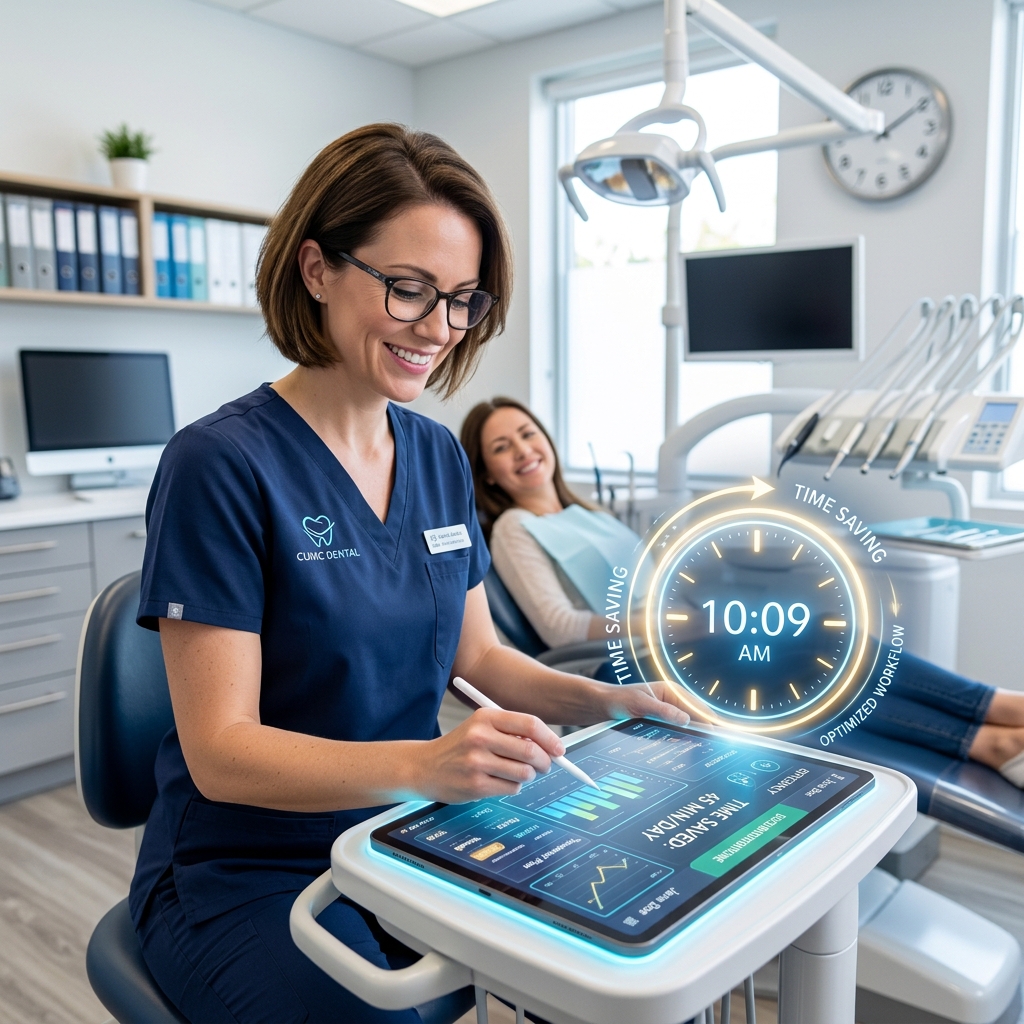
Reclaim hours of after-clinic documentation time every week using real-time AI.
Where Does All That Time Go?
Clinical documentation is not a single task. It involves recalling the specifics of each appointment, structuring findings into a coherent note, recording procedures and treatment discussions, and entering everything into the practice management system accurately. Even an experienced provider who has developed a fast workflow still needs 10 to 15 minutes per patient to produce a thorough note.
The time compounds across the day. A provider who sees 10 patients and spends an average of 12 minutes per note is looking at two full hours of documentation. That work is invisible to the schedule. It does not appear as a line item. But it is real time that comes directly from the provider's personal life or from other productive uses of their workday.
Why Can't Providers Just Chart Faster?
Some do. And the trade-off is usually accuracy. When providers rush through documentation to get home on time, notes become thinner. Important details get missed. Follow-up plans are vague. If there is ever an audit, an insurance dispute, or a clinical question months later, those rushed notes become a liability.
The goal should not be faster documentation. The goal should be documentation that happens without requiring the provider to sit down and write it at all.
What Does This Cost a Practice Financially?
Provider time has a direct financial value. If a dentist's production rate is $400 to $600 per hour and they spend two hours per day on documentation, the practice is absorbing $800 to $1,200 per day in lost production capacity. That is $4,000 to $6,000 per week. Over a year, the cost of after-hours documentation can exceed $200,000 in production that could have been allocated to patient care.
Even for hygienists, the calculation is significant. A hygienist who stays 45 minutes late every day charting is effectively donating nearly four hours of unpaid work per week, or they are being paid for time that produces no clinical revenue.
How Does AI Clinical Notes Eliminate This Problem?
AI Clinical Notes generates the appointment summary during the visit, not after it. The provider does not narrate, dictate, or type. The AI listens to the natural clinical conversation, processes the content in real time, and produces a structured note before the patient checks out.
The provider reviews the note in one to two minutes, confirms or adjusts anything that needs attention, and moves on to the next patient. By the time the last appointment of the day is finished, the documentation is already complete. There is no backlog. There is no staying late. The provider leaves when the clinical day ends.
What Does Getting Two Hours Back Every Day Actually Look Like?
For some providers, it means going home on time for the first time in years. For others, it means adding one or two more patients to the daily schedule because the documentation bottleneck no longer constrains capacity. For practice owners, it means reduced overtime costs and providers who are less burned out and more likely to stay long term.
Two hours per day is 10 hours per week. That is 500 hours per year. What a practice does with that recovered time depends on its priorities. But having it back is the first step.
See AI Clinical Notes in Action
Book a free demo and we will show you exactly how AI Clinical Notes works inside your practice management software. No pressure. Just a real look at what it can do for your clinical team.
Book Your Free DemoQuestions first? Call us at (949) 542-6773 or visit www.patientxpress.us