Quick Answer
Call transcribing records every inbound and outbound patient call in a dental practice, converts the conversation to searchable text, and stores it alongside the patient record. This gives practice owners visibility into how calls are handled, what patients are asking, and where communication breakdowns happen. It also creates an accountability layer for training, a reference for disputed conversations, and a data source for improving scheduling and follow-up workflows.
Every dental practice makes and receives dozens of calls per day. Each one contains information. A patient's concern about a procedure. A question about insurance coverage. A scheduling preference. A complaint about wait times. A request for treatment details.
In most practices, that information disappears the moment the call ends. Nobody took notes. Nobody remembers the specifics. If a patient calls back next week and references something they were told, the front desk has no record of the original conversation.
Call transcribing changes that. Every call becomes a permanent, searchable record.
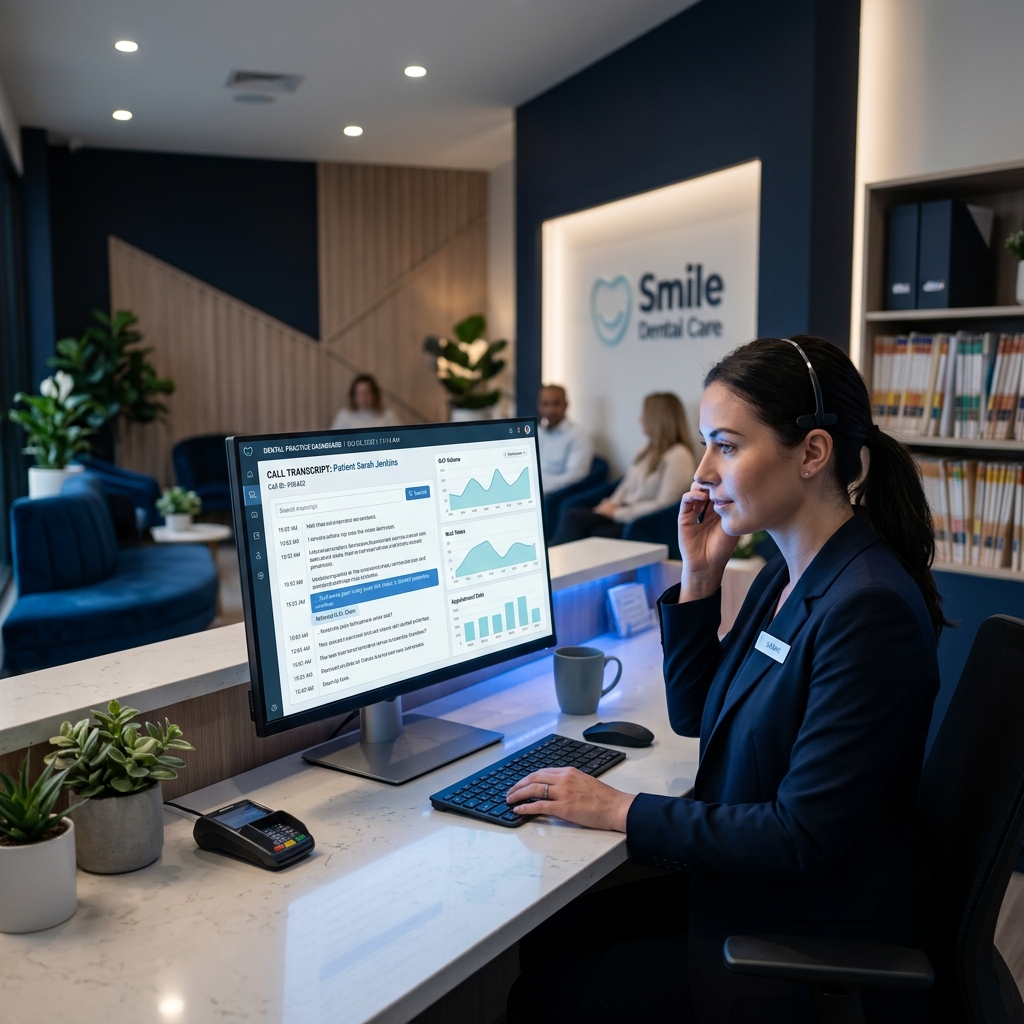
Every patient call captured, searchable, and linked to the patient record.
What Does Call Transcribing Actually Capture?
Call transcribing records the full audio of every patient call and converts it to text. The transcript is stored and linked to the patient record so the practice can reference it later. Both inbound and outbound calls are captured, which means appointment bookings, confirmation calls, recall outreach, and general inquiries all have a documented record.
The text transcripts are searchable. A practice owner can search for specific topics across all calls to identify patterns. How many patients asked about a particular procedure this month? How often is insurance coming up as a barrier to booking? Are patients mentioning wait times as a concern? The data is already in the calls. Transcribing makes it accessible.
How Does This Improve Front Desk Training?
One of the most valuable applications of call transcribing is front desk training and coaching. Practice owners and office managers can review how calls are being handled without sitting next to the front desk all day. They can identify calls where the patient had a great experience and use them as examples. They can also identify calls where something went wrong and address it constructively.
This is not about surveillance. It is about giving the team the feedback they need to improve. Most front desk employees have never heard a recording of their own calls. When they do, self-awareness alone drives improvement. Add targeted coaching from the office manager and the quality of patient communication improves across the board.
"Most front desk employees have never heard a recording of their own calls. When they do, self-awareness alone drives improvement."
What Happens When a Patient Disputes What They Were Told?
It happens in every practice. A patient calls and says they were told their insurance would cover a procedure, but the claim was denied. The front desk says that is not what they communicated. Without a record, it becomes a disagreement that damages the patient relationship regardless of who is right.
With call transcribing, the practice can pull up the original conversation and review exactly what was said. If the front desk communicated correctly, the transcript supports them. If there was a miscommunication, the practice can take responsibility and resolve it. Either way, the conversation is settled by facts, not memory.
How Does Call Data Improve Practice Operations?
Call transcripts are a data source that most practices have never had access to. Patterns emerge when you look at calls in aggregate. If a significant number of patients are calling to ask the same question, the practice can address it proactively on the website or in pre-appointment communications. If patients consistently mention difficulty reaching the office, it signals a staffing or coverage issue.
The calls are already happening. They already contain the information. Transcribing simply captures it and makes it available for the practice to use.
Does Call Transcribing Work With the AI DR?
Yes. PatientXpress call transcribing works alongside the AI DR (AI Dental Receptionist) as part of the same platform. Calls handled by the AI are transcribed automatically. Calls handled by the front desk team are also captured. Every patient interaction, whether managed by AI or by a team member, has a documented, searchable record inside the system.
Frequently Asked Questions
Start Learning From Every Patient Call
Book a free demo and we will walk you through exactly how PatientXpress works inside your practice. No pressure. Just a real look at what it can do for your team.
Book Your Free DemoQuestions first? Call us at (949) 542-6773 or visit www.patientxpress.us/try-our-ai